Last updated October 30, 2026
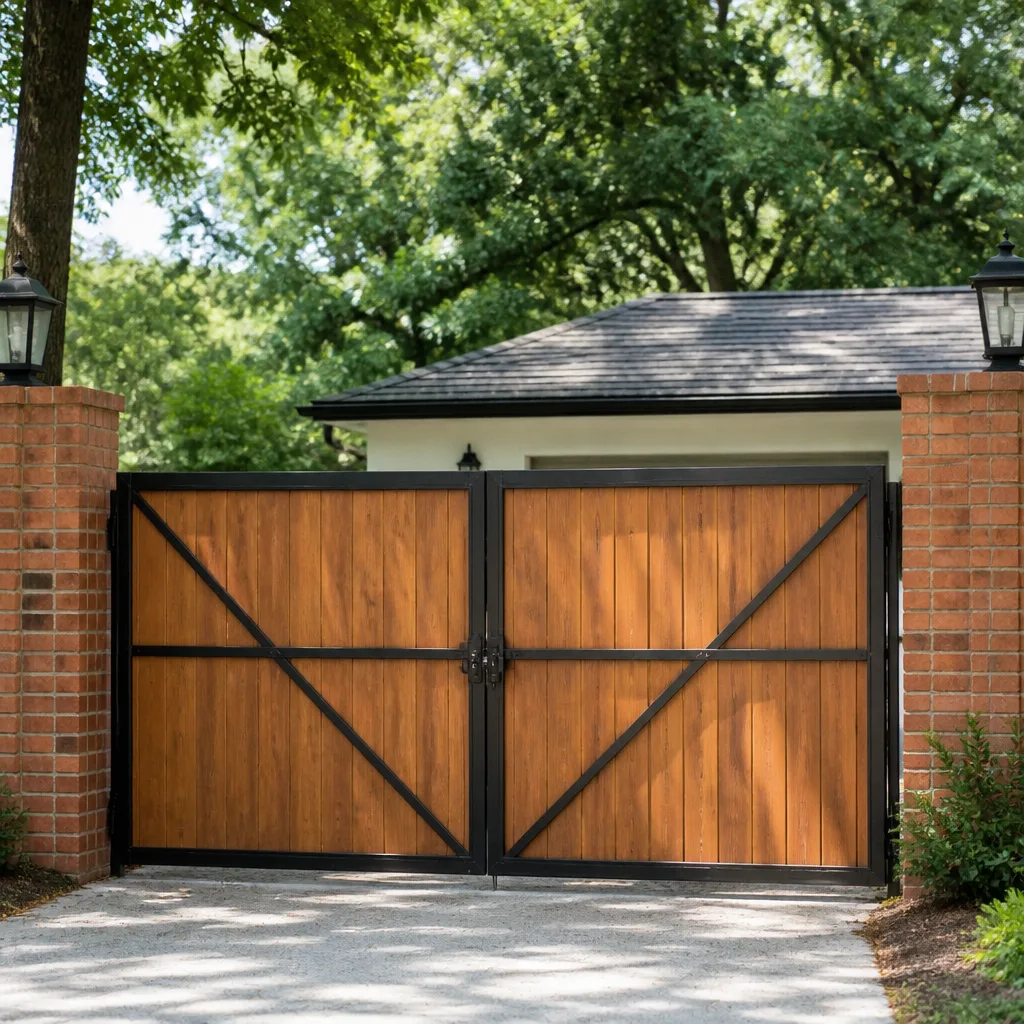 Wood & steel frame
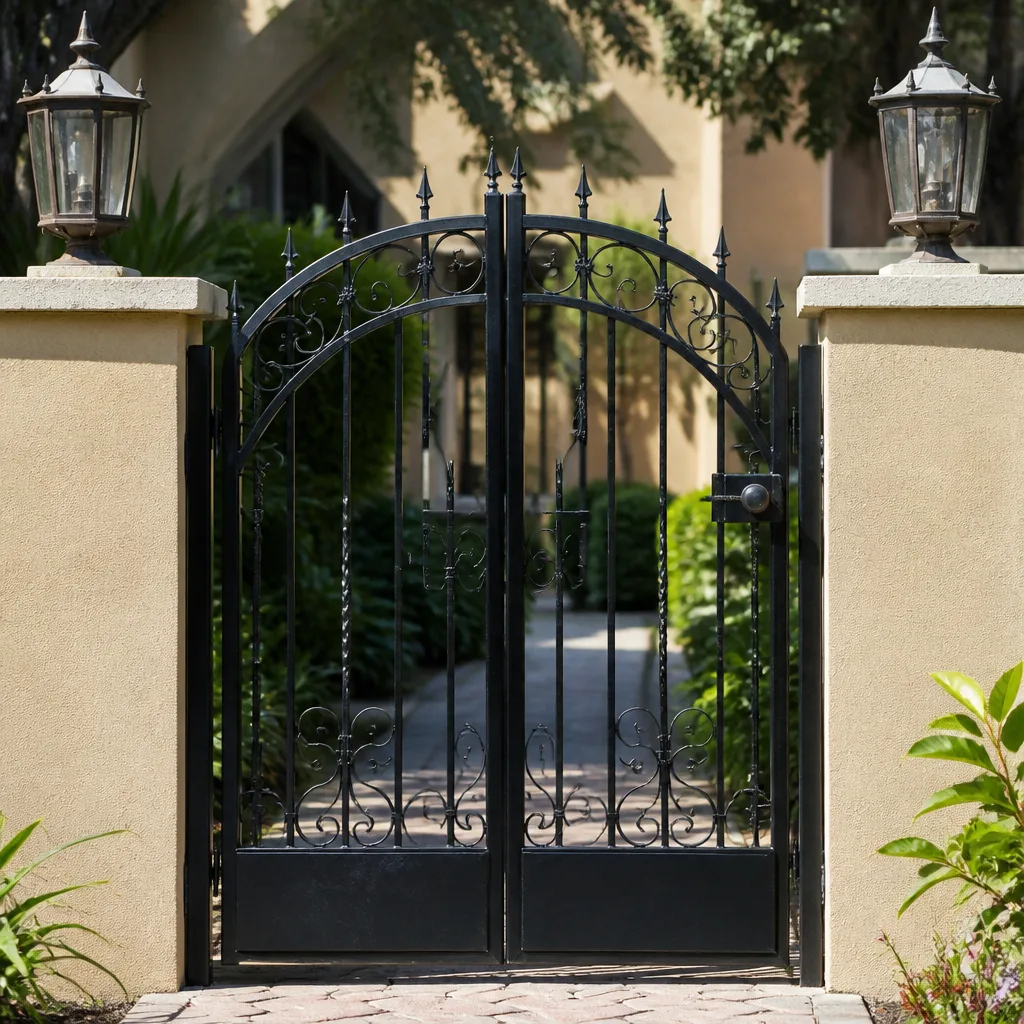 Wrought iron
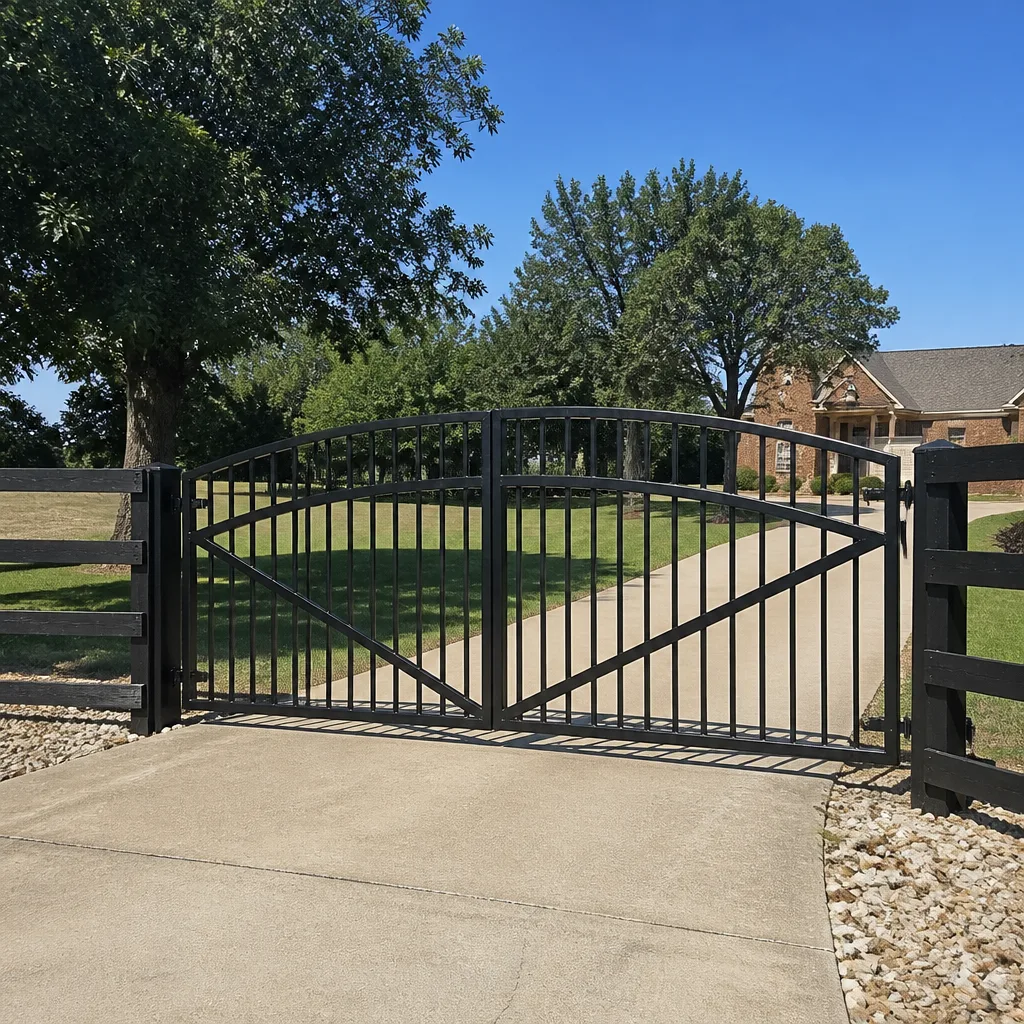 Farm & ranch
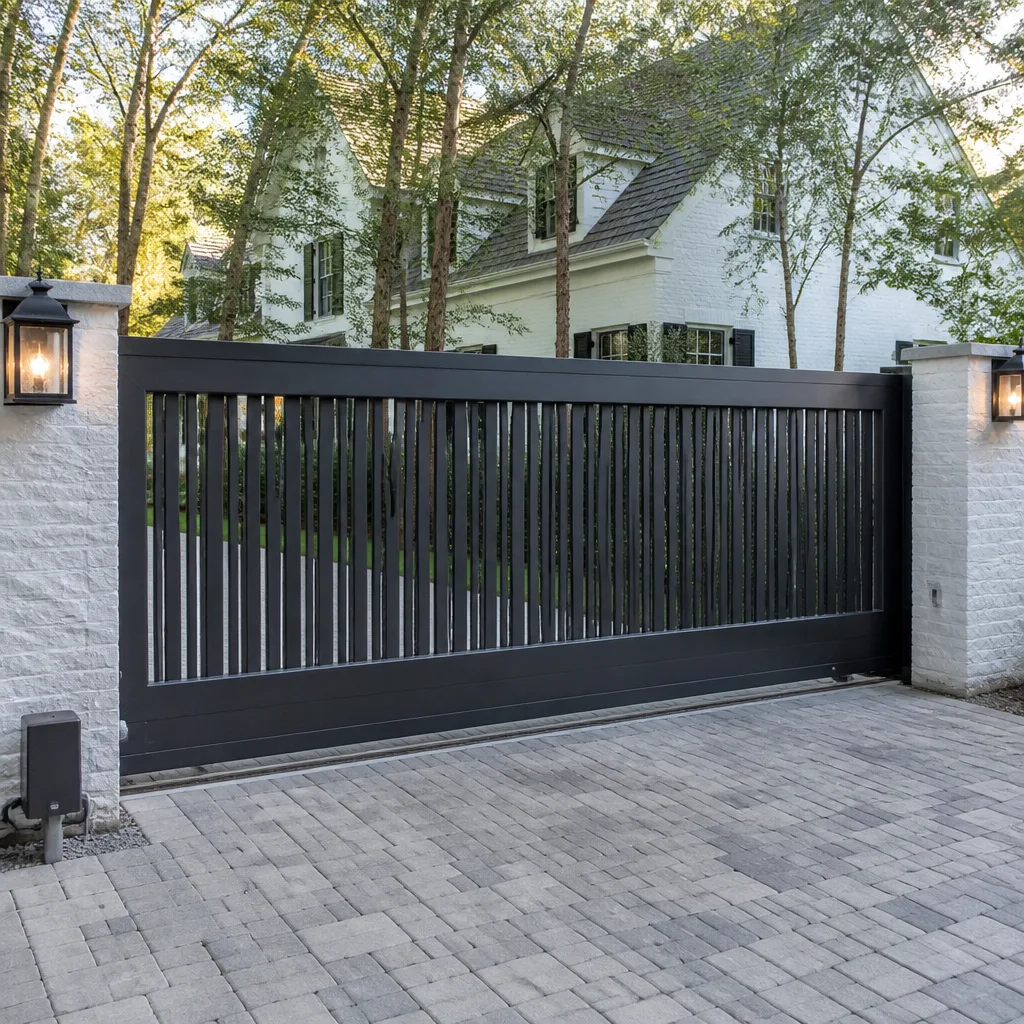 Sliding driveway gates
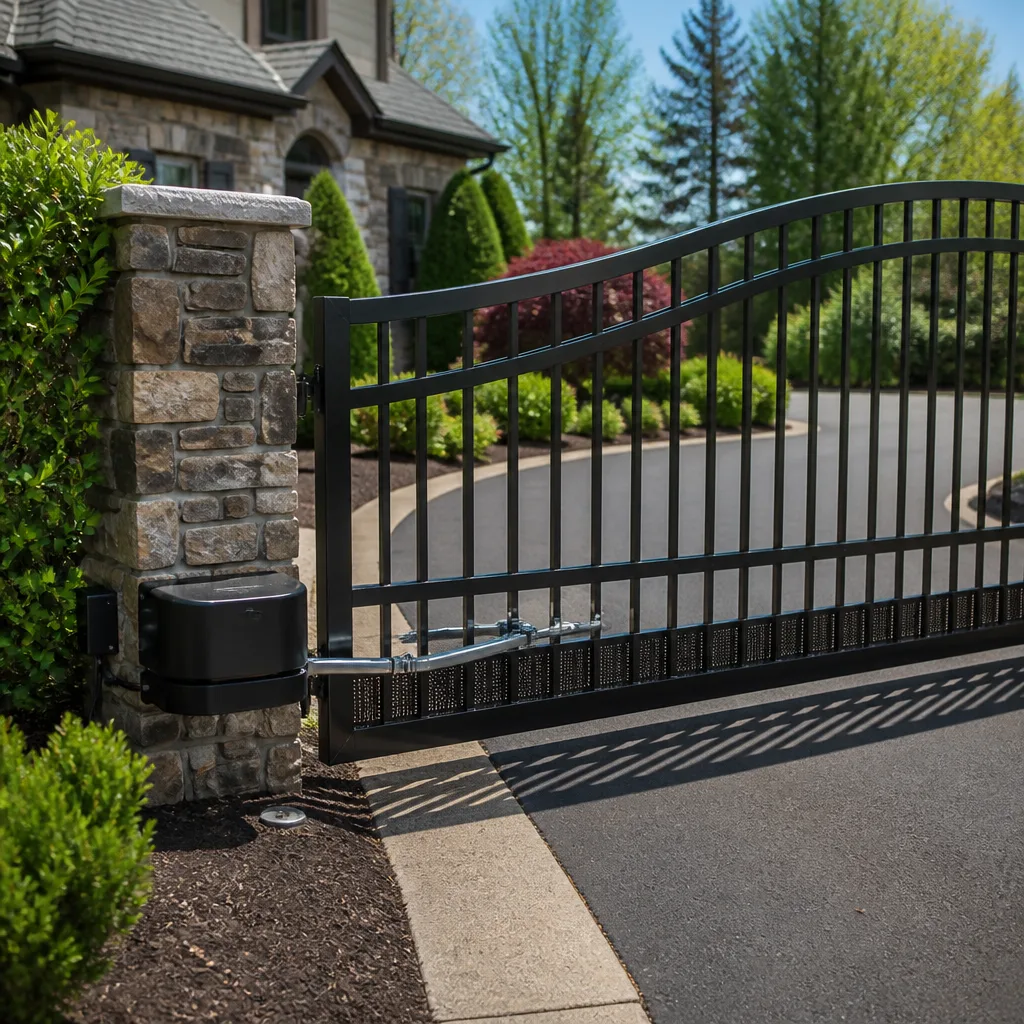 LiftMaster operators
Free on-site gate assessment - hinges, posts, and your LiftMaster or Nice gate operator checked before anything is quoted
The assessment is free and the quote is the invoice.
Get your free estimateThe Complete Gate Repair Guide for Hollywood Homeowners
A gate operator rated for 500,000 cycles can fail in under three years in Hollywood. Not because the motor is cheap, but because salt air oxidizes control boards and corrodes motor housings in ways the manufacturer’s warranty period never anticipated. If you bought a gate system expecting ten years of service based on inland performance data, Hollywood’s coastal environment just rewrote that timeline. This guide maps every gate component to the specific failure patterns our climate accelerates, so you can diagnose problems accurately, decide between repair and replacement with real criteria, and know when our Gate Repair services are the only safe option.
Quick Answer
Gate repair in Hollywood means diagnosing both the mechanical structure (hinges, wheels, track, frame) and the automation system (operator, control board, sensors, remote receivers) because coastal corrosion attacks both at different rates. Most repairs fall into three categories: mechanical wear from salt and humidity, electrical failure from control board oxidation, or sensor and safety-edge malfunctions caused by standing water and debris. A gate specialist who services your specific operator brand can usually diagnose the problem in one visit and repair most issues the same day. For The Complete Guide to Gate Repair in Hollywood, see our detailed resource.
Styles & brands we work with
Table of Contents
- Why Hollywood’s Climate Destroys Gates Faster Than Anywhere Else in Florida
- Gate System Anatomy: What Actually Breaks and Why
- Residential vs. Commercial Gate Systems in Hollywood: The Repair Differences
- Repair or Replace? A Decision Framework for Gate Operators
- HOA Gate Systems in Hollywood: Why Repairs Work Differently
- Seasonal Maintenance for South Florida’s Wet/Dry Cycle
- What You Can Safely Do Yourself vs. What Needs a Technician
- Common Mistakes to Avoid
Why Hollywood’s Climate Destroys Gates Faster Than Anywhere Else in Florida
Hollywood sits directly on the Atlantic coast, which means every gate within a few miles of the beach gets a constant bath of salt-laden air. That air carries sodium chloride particles that settle on exposed metal surfaces and start corroding within months, not years. We’ve opened control boards in Hollywood gates that look like someone poured saltwater directly onto the circuit traces. Nobody poured anything. The humidity did it.
Here’s what Hollywood conditions do to specific gate components:
- Control boards: Salt air penetrates the plastic housing seals and oxidizes copper traces on the PCB. Symptoms start as intermittent operation (gate works, then doesn’t, then works again) and progress to complete board failure. A board that lasts 7-10 years inland often dies in 3-5 years in coastal Hollywood neighborhoods like Hollywood Lakes or The Quadrangle.
- Motor housings: Powder-coated steel and aluminum both corrode, but aluminum holds up better because the oxide layer actually protects the metal underneath. Steel motor housings, unless they’re marine-grade, develop rust blooms around bolt holes and seams within 18-24 months.
- Hinges: Manual and automated swing gates both rely on bearing hinges. Salt air works its way into the bearing races, causing grinding, stiffness, and eventual seizure. A gate that swings smoothly at install can become a two-person push within three years.
- Track and wheels (slide gates): Standing water after Hollywood’s summer storms leaves mineral deposits and promotes rust on steel track. Wheels with sealed bearings survive. Wheels with open bearings collect sand and salt grit and fail fast.
- Safety edges and photo eyes: UV breaks down the rubber safety edge strips faster here than inland. Photo eye lenses get a salt film that reduces their effective range, which triggers false obstruction errors.
The takeaway: if you’re comparing repair costs or replacement timelines against advice written for a homeowner in Orlando or Dallas, you’re working with wrong assumptions. Hollywood gates operate in a harsher environment, and the fix that works inland may not survive two hurricane seasons here.
Gate System Anatomy: What Actually Breaks and Why
Every gate system, whether it’s a single-family driveway gate or a commercial slide gate at an HOA entrance, is built from two layers: the structural gate and the automation system. Understanding which layer is failing is the first diagnostic step, and it saves you from paying a technician to replace a control board when the real problem is a sagging hinge pulling the gate out of alignment.
The Structural Layer
- Gate frame and pickets: Aluminum, steel, or wrought iron. Aluminum resists Hollywood’s salt air best. Steel requires regular repainting or it fails at weld points. Wrought iron is the most corrosion-prone unless it’s regularly treated.
- Hinges: Bearing hinges for automatic gates, barrel hinges for manual. These are the mechanical pivot points that take all the weight and all the weather.
- Track, rollers, or wheels: Used on slide gates. These wear fastest when debris collects in the track, and Hollywood’s winds deliver palm fronds and sand into track channels constantly.
- Gate posts: These hold the gate and operator. If a post shifts in sandy Hollywood soil after a storm event, the entire gate system goes out of alignment and nothing the operator does will fix it.
The Automation Layer
- Operator: The motor and gearbox that moves the gate. Brands like LiftMaster, DoorKing, Elite, and FAAC each have different failure profiles. A DoorKing operator uses a different drive mechanism than a LiftMaster, so knowing your brand matters for diagnosis and parts.
- Control board: The brain of the system. This is the component most vulnerable to Hollywood’s salt air and humidity.
- Photo eyes and safety edges: The safety system that stops the gate from closing on a car or person. Hollywood codes require these on any automated gate, and they fail often enough that we carry replacements for most major brands on the truck.
- Remote receivers and keypads: The access layer. These fail from battery corrosion, UV damage to keypad membranes, and lightning strikes during South Florida’s summer storms.
- Loop detectors: Buried wire loops that sense a vehicle and trigger the gate. These fail when the wire insulation cracks from soil shifting or when lightning sends a surge through the system.
The most common Hollywood failure pattern we see is structural degradation causing automation failure. A hinge starts to bind, the operator works harder to move the gate, the motor draws more current, the control board overheats, and suddenly the gate won’t open. The homeowner calls about an electrical problem, but the root cause was mechanical. A generalist who only checks the operator will replace the board and leave the hinge problem in place. Six months later the new board burns out too. This is why gate repair in Hollywood needs to evaluate both layers in the same visit.
Residential vs. Commercial Gate Systems in Hollywood: The Repair Differences
If you have a single-family gate and your neighbor has an HOA gate, you’re dealing with fundamentally different equipment. The failure patterns differ, the repair process differs, and the cost structure differs. Here’s what separates them in Hollywood specifically.
Residential Gate Systems
Most Hollywood single-family gates use either a swing gate with an arm-style operator or a slide gate with a pad-mounted operator. Residential operators from brands like Mighty Mule and Ghost Controls are designed for lighter duty cycles, meaning they’re rated for fewer open-close cycles per day. That’s fine for a house that sees ten cycles daily. Problems start when Hollywood homeowners add a rental unit, adult children move back, or a home office means constant coming and going. The operator starts exceeding its rated duty cycle, and components fail prematurely.
Residential repairs in Hollywood also need to account for landscaping. Palms, sea grape, and ficus grow fast here, and roots can shift gate posts or push against track sections. A level gate in January can be binding by July as root growth and summer rains loosen soil.
Commercial and Light-Commercial Systems
HOAs, condo buildings, and commercial properties in Hollywood use higher-cycle operators from brands like LiftMaster, DoorKing, Elite, and Viking. These are built for dozens or hundreds of cycles per day, but they pay for that durability with more complex control systems. A commercial Hollywood gate typically includes:
- Vehicle loop detectors for free exit
- Access control integration (keypads, telephone entry, or fob readers)
- Higher-voltage power supplies
- Multiple safety devices wired in series
- Battery backup for hurricane season power outages
When a commercial gate fails in Hollywood, the failure affects an entire community or building. That changes the repair calculus: downtime isn’t just inconvenient, it’s a security exposure and an access problem for every resident or tenant. Commercial repairs also typically require coordinating with property managers or HOA boards, which means the diagnostic report matters as much as the repair itself. A clear written assessment with photos and a specific scope of work gets approvals faster than a phone call saying “the gate’s broke.”
Repair or Replace? A Decision Framework for Gate Operators
Every Hollywood homeowner eventually faces this question: should I fix the operator I have, or buy a new one? Here’s the framework we use with homeowners, applied to coastal conditions.
- Parts availability for your brand: LiftMaster and DoorKing maintain good parts pipelines, but older models from names like Elite or Mighty Mule may have boards that are no longer manufactured. If the specific control board or gear assembly isn’t available new, replacement becomes the only real option. A technician who services multiple brands can tell you immediately whether your model is still supported.
- Repair cost threshold: As a rule of thumb, if the repair cost exceeds 40-50% of a new operator’s installed price, replacement usually makes more sense. A $400 board on a $900 operator with a 5-year-old motor may buy you one more year before the motor fails. A new operator resets the clock on the entire system.
- Corrosion assessment: This part is Hollywood-specific. If the operator housing shows significant rust pitting or the control board has visible salt residue on the traces, the damage isn’t isolated to one failed component. Other components are likely near failure too. Replacing one board in a heavily corroded system is throwing money at a problem that will reappear.
- Age of the safety system: Hollywood code requires functioning photo eyes and safety edges on automated gates. If your operator is old enough that its safety components are obsolete, you may not be able to repair the system to code compliance. Replacement is the responsible path.
- Duty cycle needs: If your current operator is undersized for how your Hollywood household actually uses the gate, repair only delays the next failure. Upgrading to a higher-cycle operator while replacing the system is the fix that ends the repeat service calls.
For full gate installation in Hollywood, the decision criteria expand to include post condition, gate weight, and code requirements, but the same logic applies: coastal corrosion shortens component lifespans across the board, so a repair must be evaluated against the age and condition of the whole system, not just the part that failed today.
HOA Gate Systems in Hollywood: Why Repairs Work Differently
Hollywood has a high concentration of gated communities, from Emerald Hills to Hollywood Oaks to the condo corridors along A1A. HOA gate systems present repair challenges that single-family gates don’t, and understanding the difference matters whether you’re a board member, a property manager, or a resident trying to figure out why the gate has been stuck open for a week.
First, HOA gates are shared infrastructure, which means they run hundreds of cycles daily. A gate that opens 300 times a day needs a commercial-grade operator, not a residential one. Communities that installed residential-duty operators to save money end up replacing motors every two to three years in Hollywood’s climate, which costs more than the commercial unit would have cost initially.
Second, HOA repair decisions move through boards and management companies. The technician isn’t just fixing a gate; they’re producing documentation that justifies the expense to a group. A repair quote that says “replace board” gets tabled. A quote that says “control board failed due to salt corrosion, photos attached, same failure on previous board 14 months ago, recommend sealing upgrade with replacement” gets approved.
Third, HOA systems often integrate with access control: telephone entry, keypad codes for residents, fob readers, and sometimes camera systems. A gate repair that doesn’t preserve those integrations creates new problems. Technicians need to test the full access sequence after any repair, not just confirm the gate opens and closes.
Fourth, HOA gates in Hollywood must comply with stricter safety requirements. Photo eyes at multiple heights, safety edges on both leading and trailing edges, and often redundant loops. A repair that bypasses a safety device to get the gate working fast is both illegal and a liability the HOA doesn’t want.
Seasonal Maintenance for South Florida’s Wet/Dry Cycle
Hollywood doesn’t follow a four-season maintenance calendar. We have two seasons: wet (May through October) and dry (November through April). Each one stresses gate systems differently, and the maintenance tasks shift accordingly. Here’s the checklist we recommend for Hollywood gate owners.
Wet Season Maintenance (May – October)
- Check drainage around gate posts and track: Standing water softens soil and shifts posts. Make sure water drains away from the gate footprint, not toward it.
- Inspect track channels for debris: Palm fronds, sand, and leaf litter collect in slide gate tracks during afternoon thunderstorms. Clean the track monthly during peak storm season.
- Test photo eyes after every major storm: Driving rain and wind can knock photo eyes out of alignment or coat lenses with salt film. A quick wipe with a damp cloth restores function.
- Verify battery backup condition: If your Hollywood gate has battery backup for hurricane season, test it monthly during the wet season. Batteries degrade faster in heat and humidity.
- Check for rust bloom on hardware: Catch surface rust early with a wire brush and marine-grade paint before it becomes structural.
Dry Season Maintenance (November – April)
- Lubricate hinges and moving parts: Dry season is the right time to lubricate hinge bearings, wheel bearings, and the operator’s drive mechanism. Use a marine-grade lubricant that won’t wash away in the first summer storm.
- Inspect control board for early corrosion signs: Open the operator housing and look for white or green residue on the board. Early detection means a cleaning may save the board before traces fail.
- Test all access devices: Replace keypad batteries, test remotes, and verify fob readers before the holiday season when visitors and package deliveries spike.
- Check gate alignment: Dry season is when soil settles and gates can shift slightly. A gate that binds at the latch point is easier to correct before wet season softens everything again.
- Review safety edge condition: UV degrades safety edge rubber. Check for cracks and brittleness, especially on south-facing gates that get the strongest sun.
This maintenance rhythm reflects how Hollywood’s actual climate behaves, not a generic seasonal checklist written for homeowners in Ohio. Gates here don’t need winterizing, but they do need storm preparation and salt mitigation.
What You Can Safely Do Yourself vs. What Needs a Technician
Some gate maintenance is genuinely DIY-friendly. Some gate repair is genuinely dangerous. Here’s the honest breakdown, written for a Hollywood homeowner who wants to avoid an unnecessary service call without taking on a repair that could hurt someone or damage the system. For deeper context, read DIY vs Professional Gate Repair: The Hollywood Homeowner’s Decision Guide.
Safe to Do Yourself
- Clean photo eye lenses: A damp cloth removes the salt film that causes false obstruction errors. This fixes a surprising number of “gate won’t close” complaints.
- Clear debris from slide gate track: Palm fronds, sand, and small branches are the most common Hollywood track obstruction. Clear the track and the gate often works again.
- Lubricate accessible hinges: If your swing gate has exposed barrel hinges, a few drops of lubricant on the pivot points is straightforward maintenance.
- Check remote batteries: A dead battery in a remote is not a gate problem. Replace the battery before calling a technician.
- Inspect visible wiring for damage: If a landscaper’s trimmer nicked a wire, you can see it. Document it, but leave the actual repair to a professional if it involves the operator’s power supply.
- Any work on the operator’s internal components: Gate operators contain capacitors that hold a charge even when the power is off. Opening the housing and touching the wrong component can deliver a serious shock.
- Spring-loaded gates or counterweight systems: Some Hollywood swing gates use tension springs or counterweights that store enormous energy. A spring under tension that releases unexpectedly can cause severe injury.
- Control board diagnosis or replacement: Connecting the wrong wire or installing a board with incorrect settings can fry the new board instantly and void the warranty.
- Track realignment or post adjustment: This requires leveling tools and an understanding of how gate weight distributes across the track. A misaligned track makes the problem worse, not better.
- Any work involving the power supply: Gate operators run on 120V or 240V circuits. This is not low-voltage work. If the problem involves the power feed, a licensed technician with electrical experience is the only safe option.
Leave to a Technician
The line is simple: if the task involves the structural integrity of the gate, the operator’s internal components, or anything electrical beyond replacing a remote battery, the risk isn’t worth the savings. Hollywood gates are heavy, under tension, and sometimes carrying a live electrical charge. A professional diagnosis costs less than a hospital bill or a replacement board bought and fried by accident.
Electric Gate Repair: The Core of What We Do
Electric gate repair is where Hollywood’s climate does the most damage, and it’s where generalist contractors are most likely to guess. We’re a dedicated gate repair company, and electric gate repair in Hollywood is our primary trade, not a side service. Here’s what that focus means for a homeowner troubleshooting an automated gate.
When your gate won’t open, the problem could be the remote, the receiver, the control board, the safety sensors, the motor, the gearbox, the power supply, or the structural alignment. A technician who works on gates all day, every day can isolate the failure quickly because they’ve seen the same failure pattern dozens of times. A technician who splits their week between fences, garage doors, and the occasional gate has to work through the diagnostic tree slowly and may replace parts that didn’t need replacing.
Brand knowledge matters in electric gate repair. A LiftMaster operator’s error codes differ from a DoorKing’s. A Mighty Mule system fails differently than an Elite. We service nine gate operator brands, which means we’re not pushing you toward one replacement product because it’s the only one we know. We work on your brand, whatever it is, and we diagnose it accurately because we see these systems daily.
Why One Call Should Cover the Gate and the Operator
Hollywood homeowners with automated gates face a coordination problem: when the gate fails, do you call a fencing company for the structure or an electrician for the operator? The honest answer is that most fencing companies don’t stock gate operator parts, and most electricians don’t stock gate hinges. So the homeowner makes two calls, schedules two appointments, and hopes both technicians show up before the problem compounds.
Hacienda Gate Repair is structured around a different model. We service both the gate structure and the automation system in the same visit. One call covers the gate and the operator. If the diagnosis reveals a sagging hinge caused a motor burnout, we fix both. If the track needs realignment and the photo eyes need replacement, one technician handles it. This isn’t about convenience alone; it’s about not having two repair efforts working at cross purposes.
For Hollywood homeowners, that matters because coastal corrosion rarely damages just one layer of a gate system. The salt air that ate the control board probably also started rusting the hinge bolts. The storm that knocked the gate off its track probably also shorted the safety sensor. A single-source inspection catches both problems in the same diagnostic pass, and that’s the difference between one service call and three.
Gate Materials That Survive Hollywood vs. Materials That Don’t
If you’re planning a future gate replacement or evaluating whether your current gate is worth repairing, material choice matters more in Hollywood than almost anywhere in the continental US. Here’s how common gate materials perform in our specific coastal environment.
Materials That Hold Up
- Marine-grade aluminum: This is the best overall choice for Hollywood gates. It resists salt corrosion, doesn’t rust, and is light enough to reduce strain on operators. Powder-coated aluminum with a marine finish can last 20+ years with basic maintenance.
- 304 or 316 stainless steel hardware: Hinges, bolts, and fasteners should be stainless. 316 stainless is the marine grade and is what we recommend for anything within two miles of the ocean.
- Composite or vinyl materials: Some Hollywood homeowners are choosing composite gate panels that don’t corrode at all. These aren’t right for every application, but they eliminate the rust problem entirely.
Materials That Struggle
- Standard steel: Unless it’s hot-dip galvanized and powder-coated, standard steel gates develop rust at welds and cut edges within two to three years in Hollywood. The inland recommendation to “just repaint it every few years” underestimates how fast coastal salt air works.
- Wrought iron: Beautiful but maintenance-heavy in Hollywood. Wrought iron needs annual rust treatment and repainting to survive. If the maintenance lapses, the rust becomes structural within five years.
- Zinc-plated hardware: The zinc coating is sacrificial, which means it corrodes to protect the steel underneath. In Hollywood’s salt air, the zinc disappears fast and leaves bare steel, which then rusts and seizes.
This isn’t a materials science lecture for its own sake. If your gate has standard steel hinges and you’re deciding whether to repair the operator or replace the whole system, the hinge material should factor into that decision. Rebuilding automation on a gate that’s structurally failing is another way to waste money twice.
See the difference
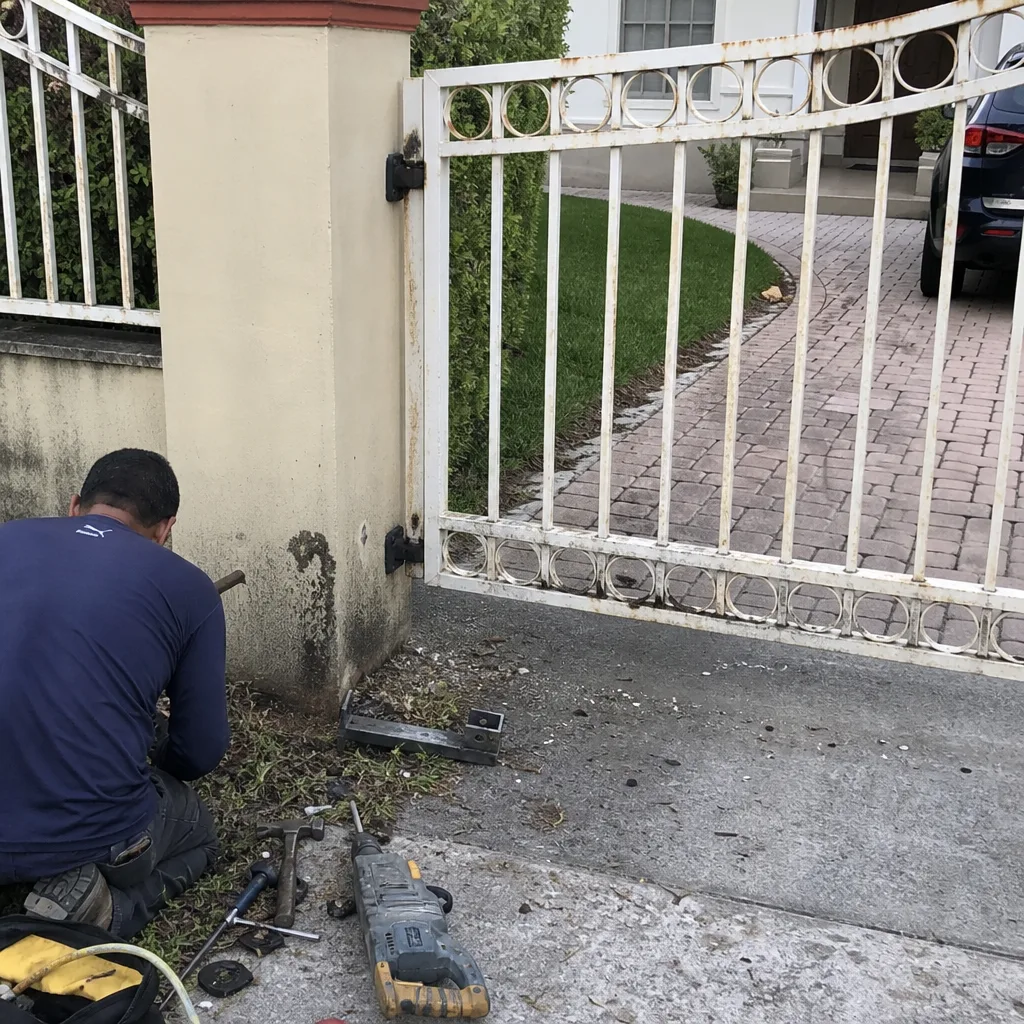 Before
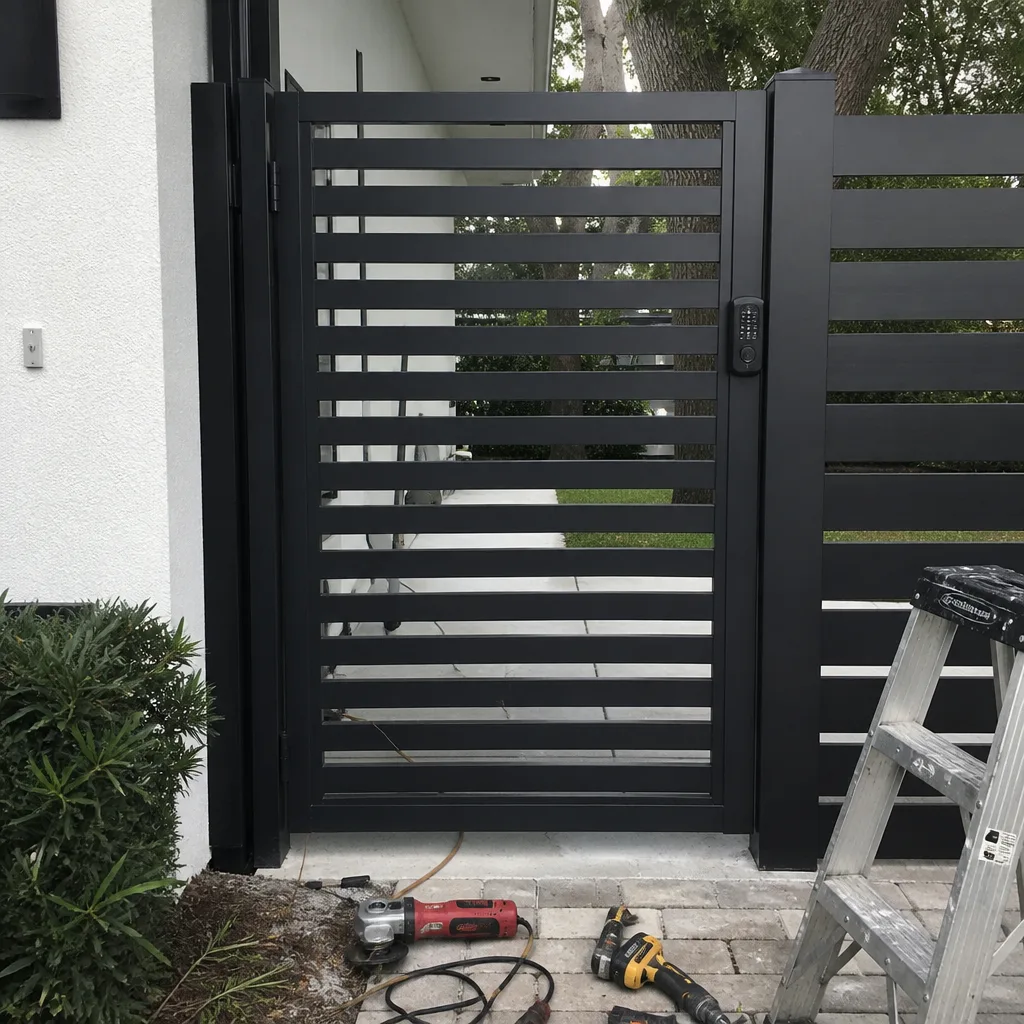 After
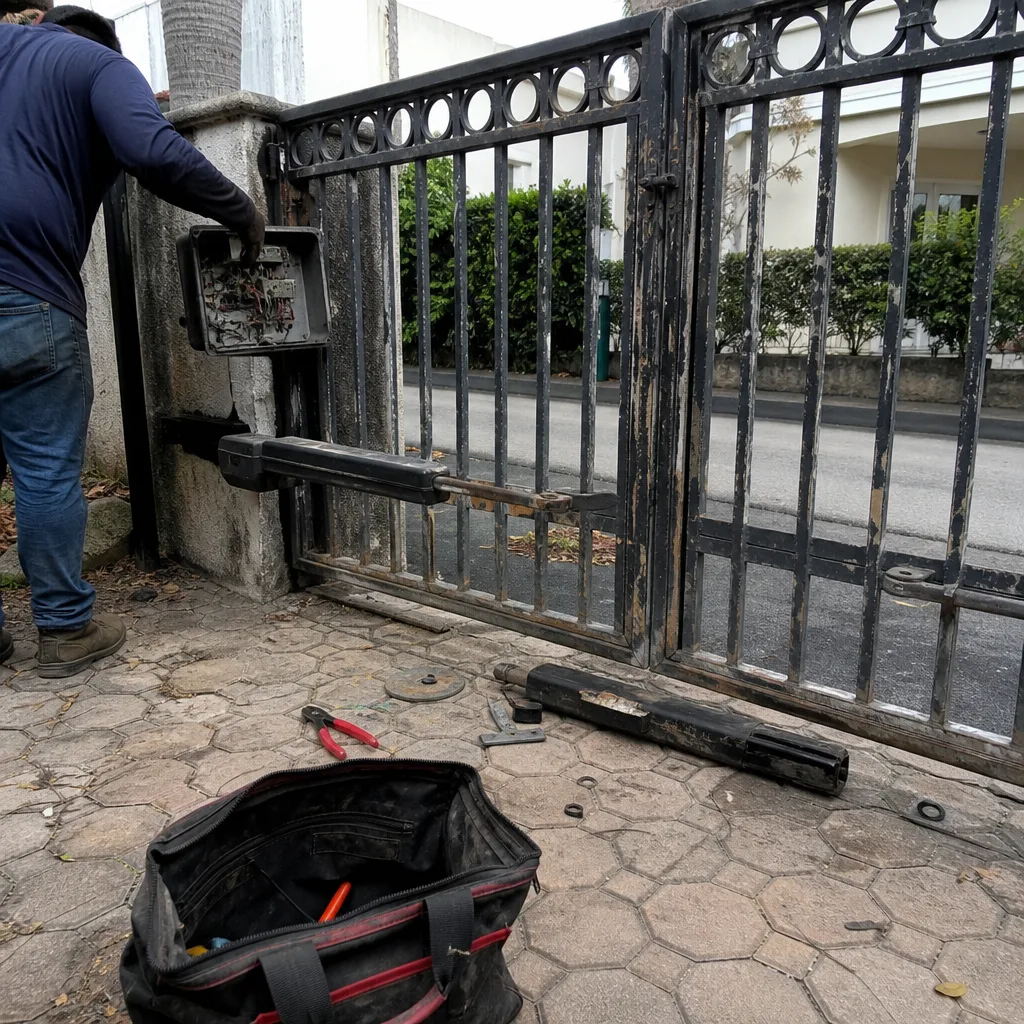 Before
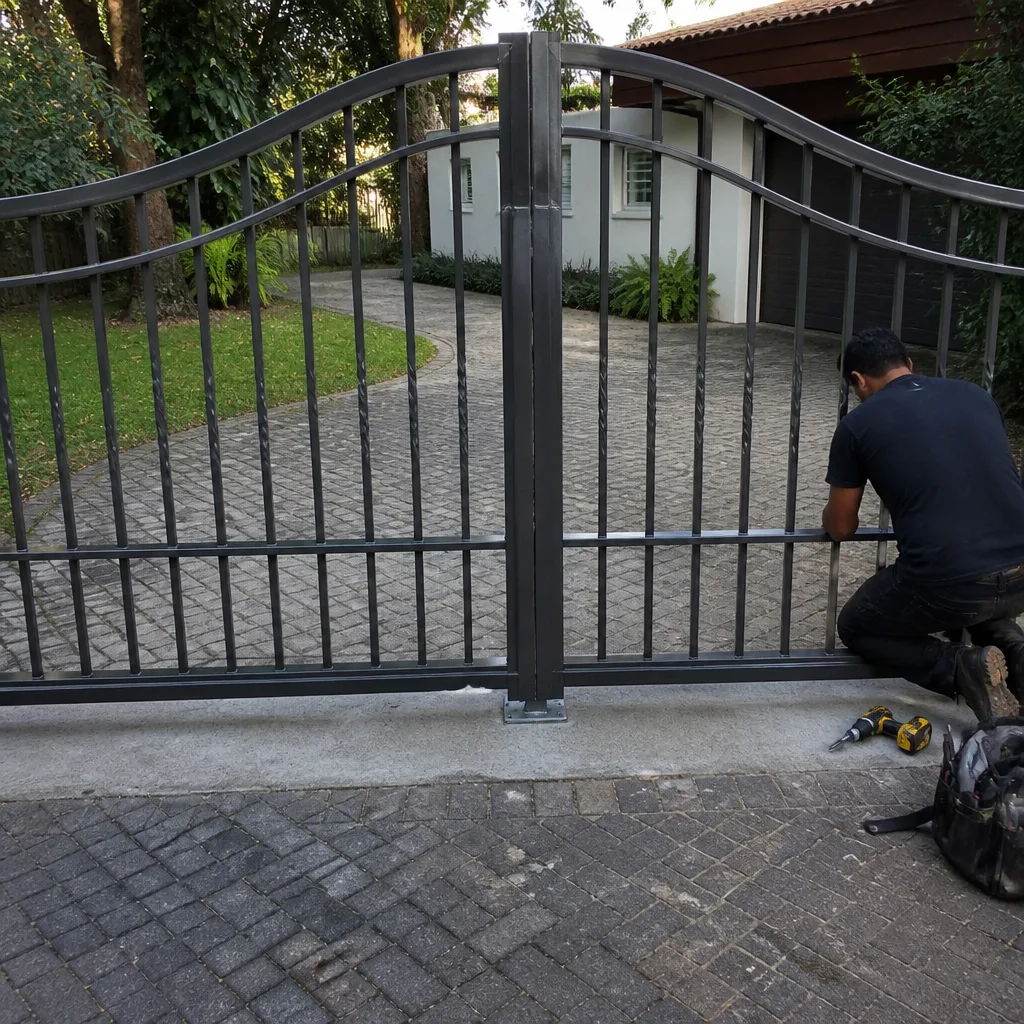 After
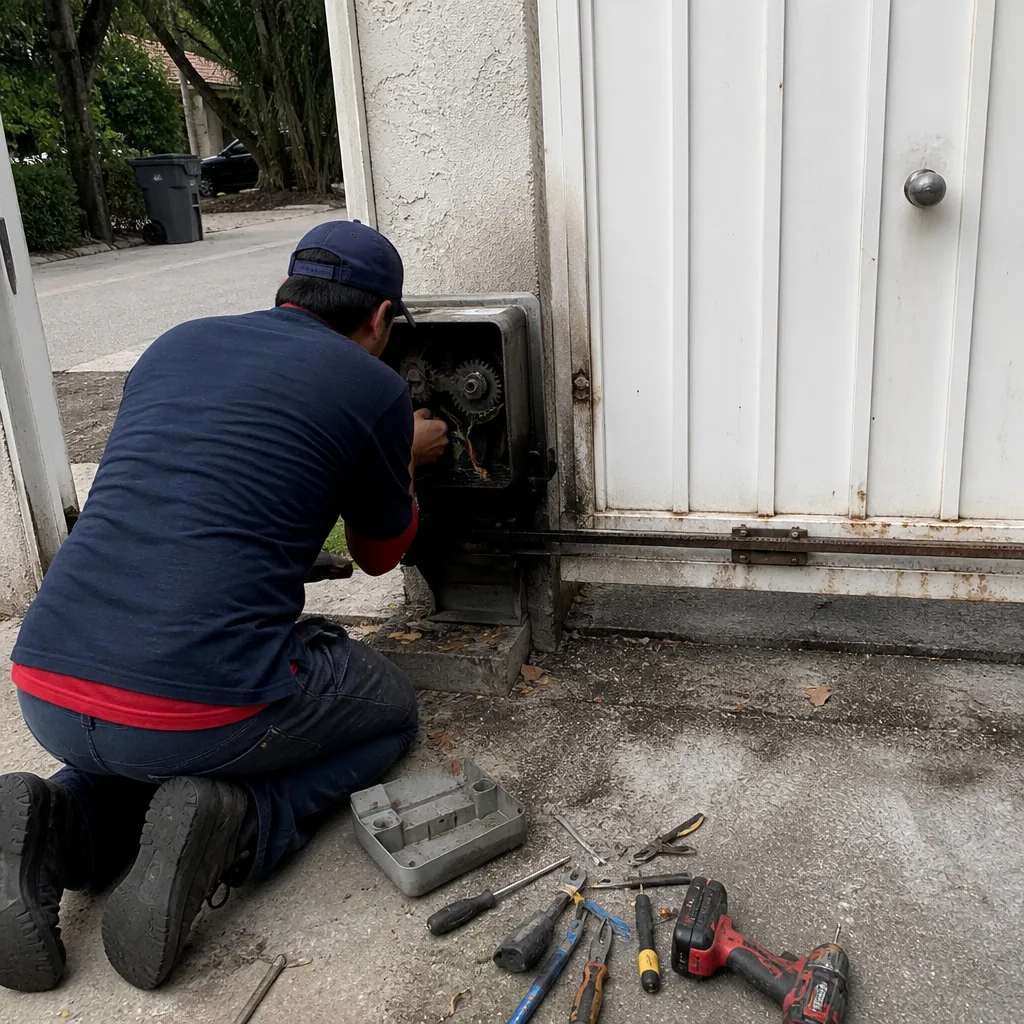 Before
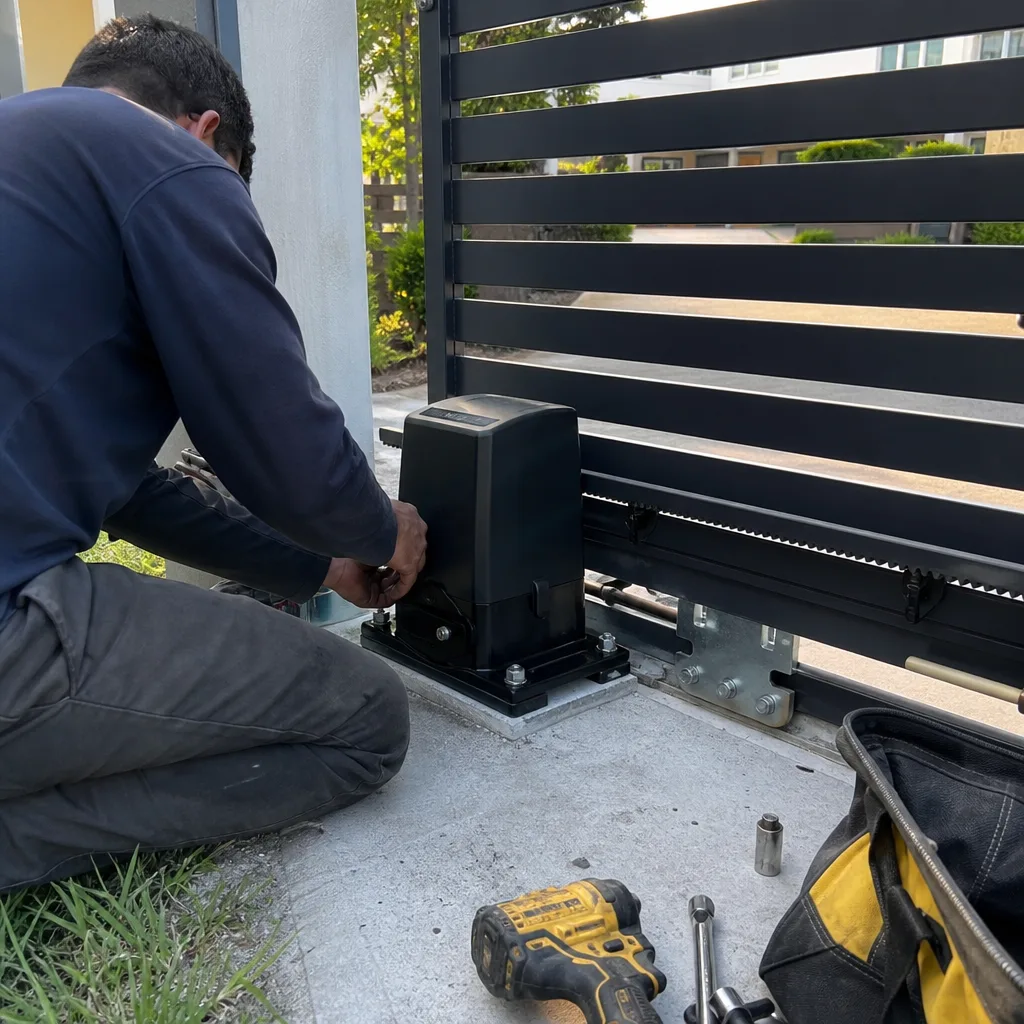 After
Common Mistakes to Avoid
- Ignoring intermittent operation: “The gate works most of the time” usually means a control board is starting to fail or a connection is loosening. By the time it fails completely, the repair is more expensive than an early fix would have been, and you’re locked out or locked in at the worst possible moment.
- Replacing the operator without checking the structure: If a hinge or track problem caused the operator to fail, the new operator will fail the same way. Always diagnose the full system before replacing any component.
- Buying the cheapest replacement operator: In Hollywood’s environment, a budget residential operator has a shorter lifespan than the same model would inland. That “savings” evaporates when you’re replacing it again in three years. Invest in an operator rated for your actual gate weight and duty cycle.
- Skipping photo eye maintenance: A dirty or misaligned photo eye is the most common cause of “gate won’t close” calls, and it usually takes 60 seconds to fix. Wipe the lenses during your monthly check.
- Waiting until hurricane season to test battery backup: If your gate has battery backup, test it in April, not August. Finding a dead battery two days before a storm means you’re on a waiting list with everyone else who waited.
- Using the wrong lubricant: Heavy grease attracts sand and salt in Hollywood’s environment and turns into grinding paste inside hinge bearings. Use a marine-grade lubricant designed for coastal conditions, not whatever’s on the garage shelf.
- Assuming a generalist can fix a specific brand problem: Gate operators are not interchangeable. A technician who doesn’t routinely service your specific brand may spend hours troubleshooting by trial and error. Find someone who knows your operator by name.
When to Call a Professional
Call a gate specialist when the gate won’t move at all, when it moves but stops mid-cycle, when it reverses on its own, when you hear grinding from the operator, when the gate has shifted visibly out of alignment, or when any electrical component shows signs of corrosion or burning. These are not maintenance issues; they’re failures that require diagnosis and repair with proper tools and parts. Your gate is a heavy, powered piece of equipment operating in a corrosive coastal environment. The moment you’re unsure about what’s wrong, a diagnostic visit costs less than guessing wrong. Hacienda Gate Repair offers free estimates for Hollywood homeowners. Call (855) 362-1433 for a diagnostic visit and straight answers about your gate. See Hacienda Gate Repair home for our full service details.
Frequently Asked Questions
Gate repair costs in Hollywood vary by the component involved. Simple fixes like a photo eye cleaning or remote reprogramming are typically inexpensive. Control board replacements, hinge replacements, and motor work run higher depending on the brand and model. The only way to get an accurate number is a diagnostic visit, because two different “gate won’t open” calls can have completely different causes and different repair costs. Call (855) 362-1433 for an exact quote after diagnosis. Estimates are free.
In our experience, gate operators in Hollywood last 3 to 8 years depending on the brand, the coastal proximity, the duty cycle, and whether the owner performed regular maintenance. A quality commercial-grade operator can last a decade or more with proper care and occasional board replacement. The same operator installed two blocks from the beach will generally fail sooner than one installed five miles inland, purely because of salt air exposure.
Yes. We service all of those brands and several others, including FAAC, BFT, Linear, Viking, and Ghost Controls. We work on your brand rather than trying to sell you a different one. Brand-specific experience means faster diagnosis and correct parts on the first visit.
Intermittent operation in Hollywood usually points to a control board beginning to fail from salt corrosion, a loose connection that expands and contracts with temperature and humidity, or a photo eye that’s dirty or slightly misaligned. The first step is cleaning the photo eye lenses. If the problem persists, a diagnostic visit is the fastest way to identify the failing component before it becomes a full failure.
Repair makes sense when the failed component is available, the rest of the system is in good condition, and the repair cost stays under about half the cost of a new operator. Replacement makes more sense when the board is obsolete, the operator housing is heavily corroded, or the system has already had multiple repairs in a short period. A technician who services your specific brand can give you an honest recommendation based on parts availability and the condition of your particular unit.
Yes. We service HOA communities, condominium buildings, and light-commercial properties throughout Hollywood. Commercial gate repair involves higher-cycle operators, access control integration, and code compliance for safety devices, all of which are within our regular scope of work. We also provide written diagnostic reports to help boards and property managers move approvals faster. Call (855) 362-1433 to schedule an evaluation.
The Bottom Line
Hollywood’s salt air, standing water, and relentless UV change the rules for gate ownership. Components that would last a decade inland fail in half that time here, and the failure patterns are predictable if you know what to look for. The homeowner who understands their gate system, maintains it on South Florida’s wet/dry rhythm, addresses intermittent problems early, and calls a brand-specific specialist when needed will get more years out of every component. Explore more guides & resources to keep your system running longer. The homeowner who waits for total failure, skips maintenance, and hires a generalist will pay more over time, every time. Your gate is a mechanical and electrical system living in a corrosive environment. Treat it like one, and it will serve you well.
Written by the team at Hacienda Gate Repair, serving Hollywood since 2012.