Last updated October 30, 2026
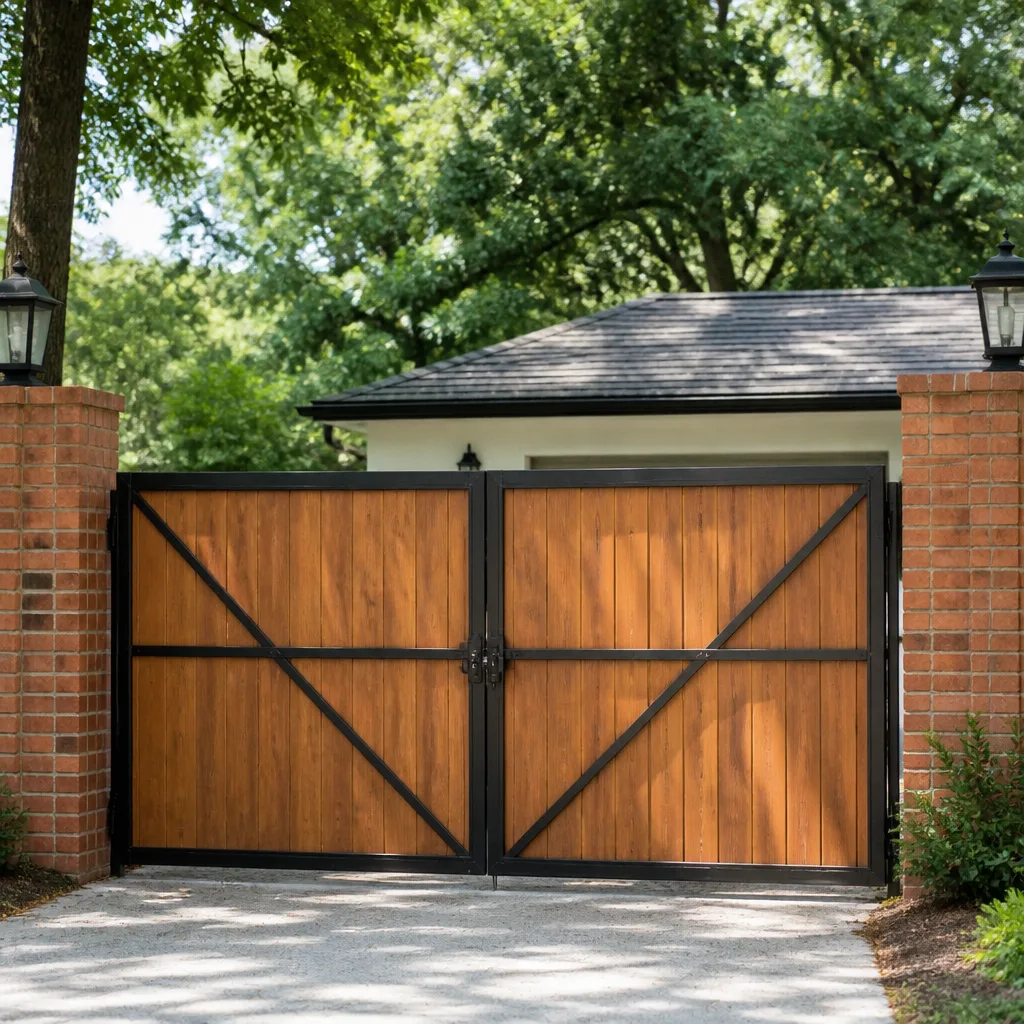 Wood & steel frame
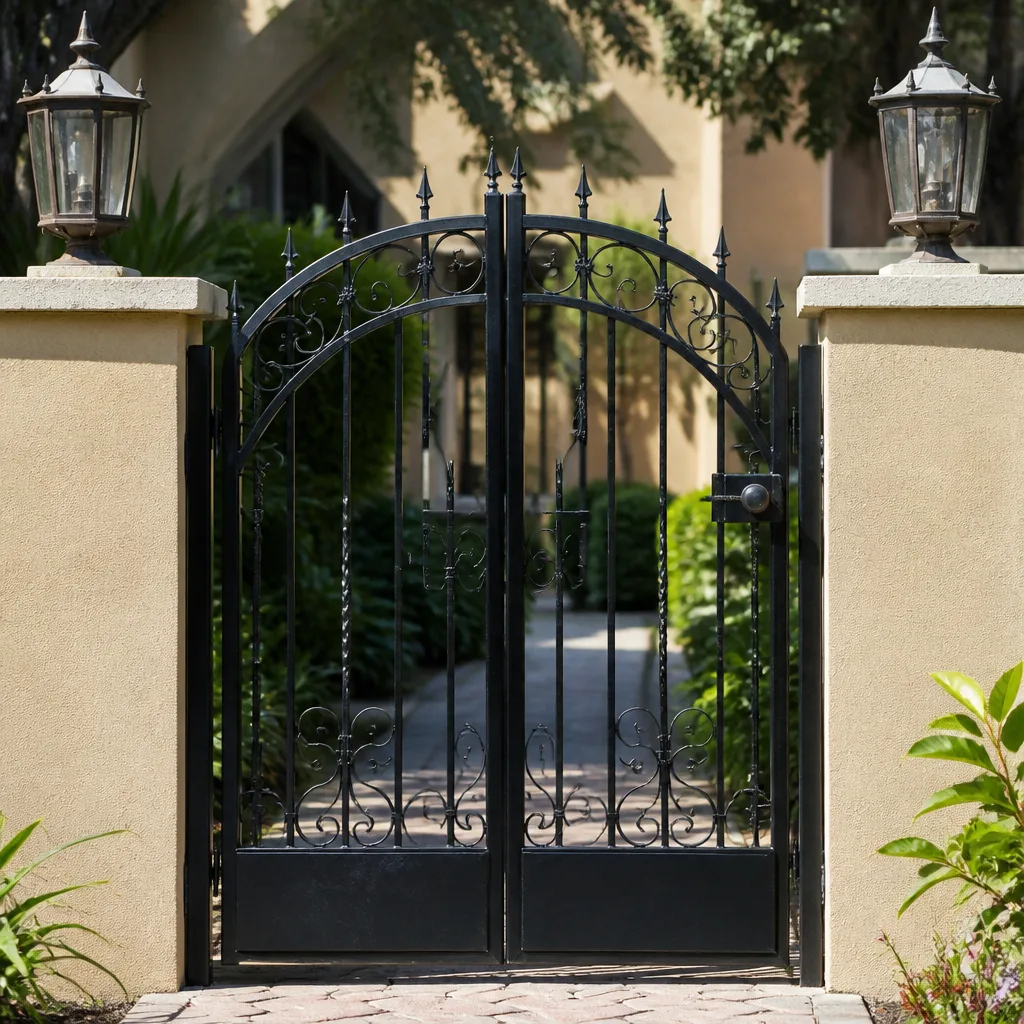 Wrought iron
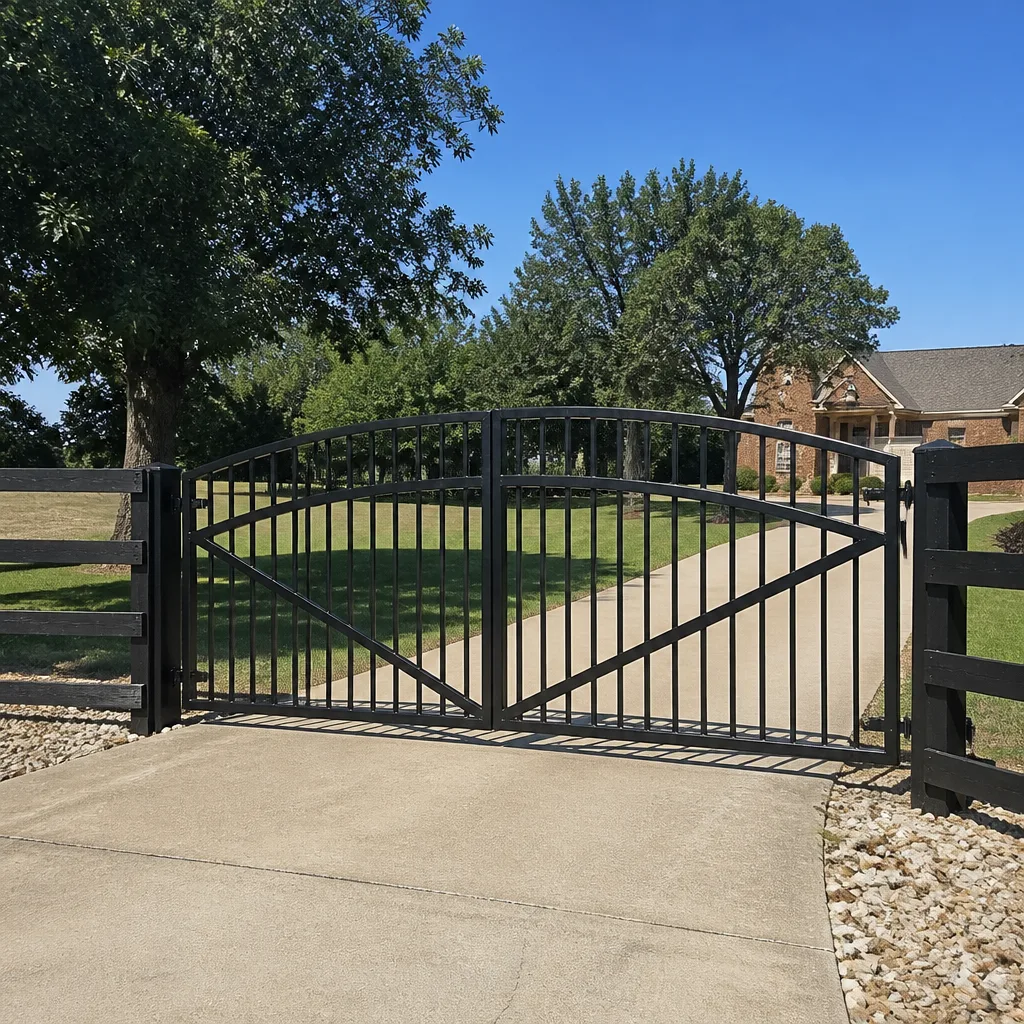 Farm & ranch
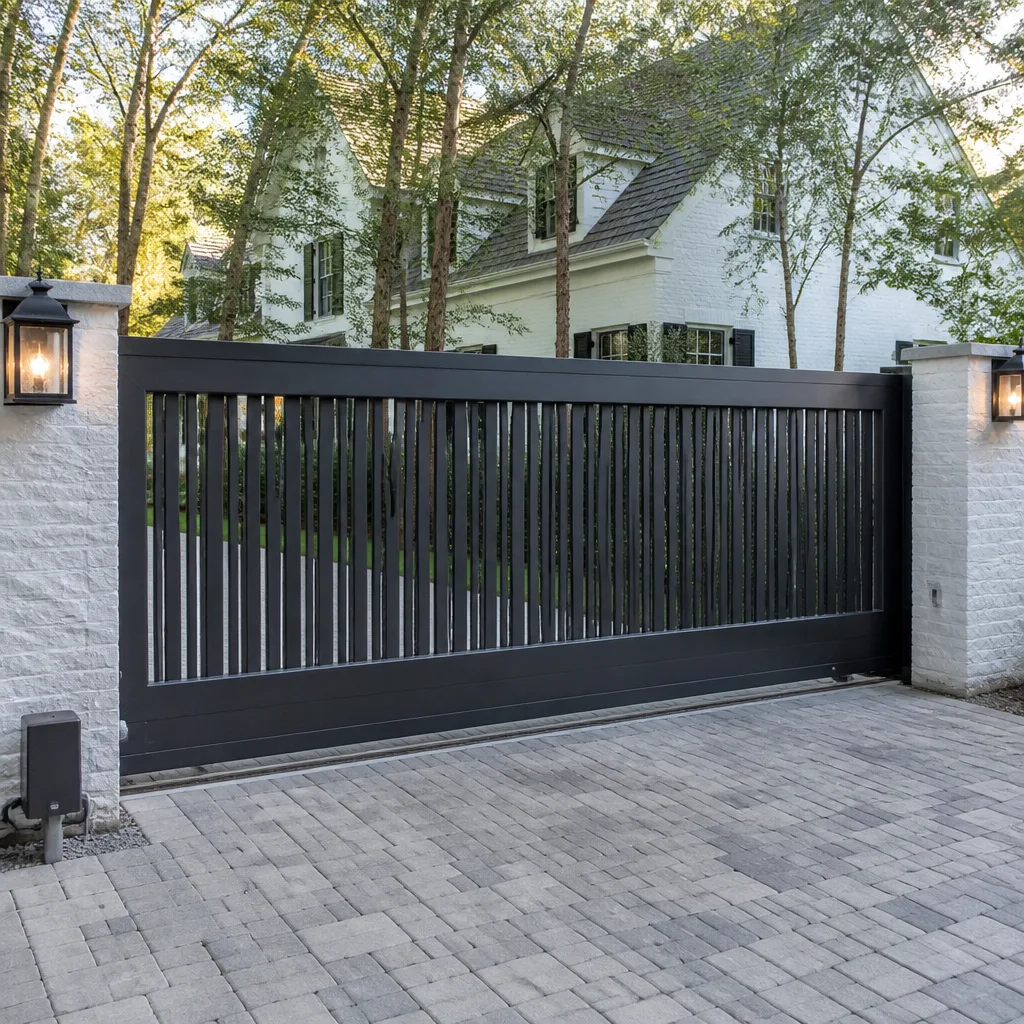 Sliding driveway gates
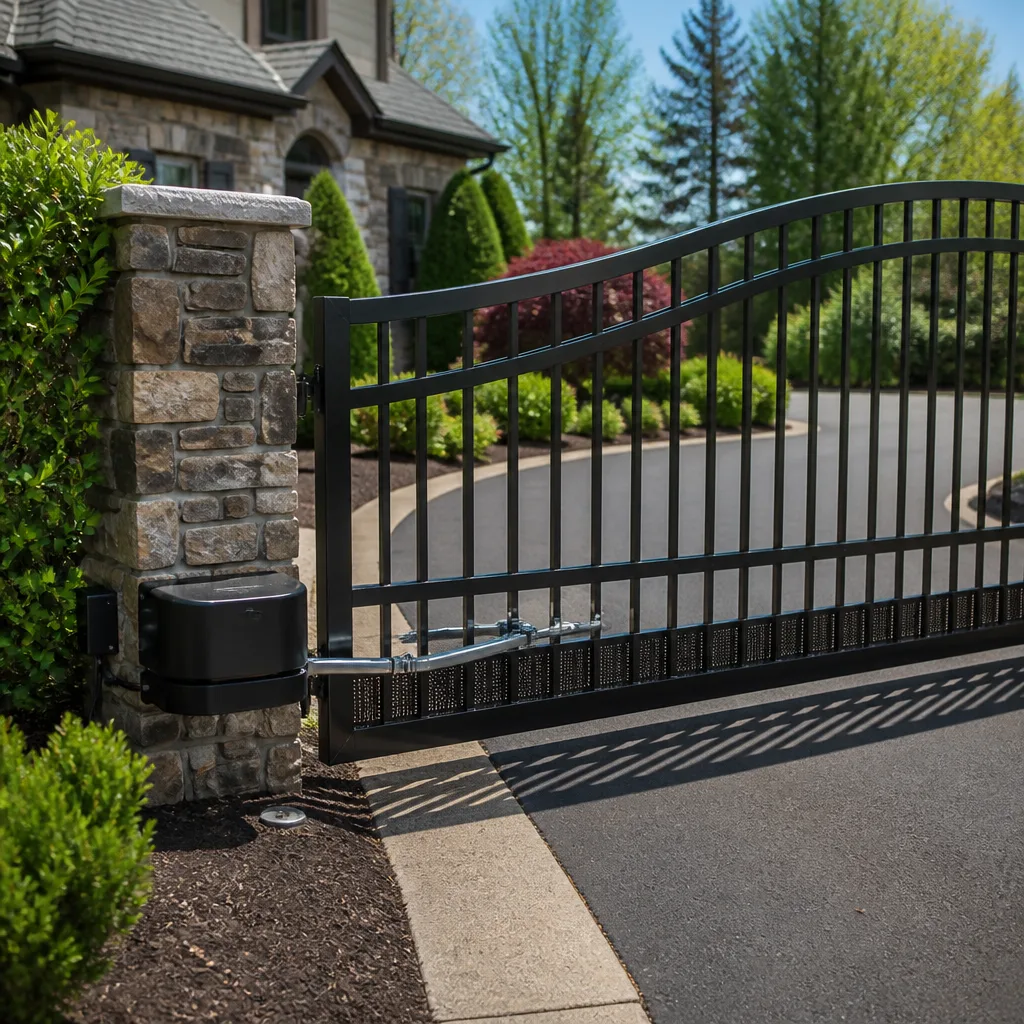 LiftMaster operators
Free on-site gate assessment - hinges, posts, and your LiftMaster or Nice gate operator checked before anything is quoted
The assessment is free and the quote is the invoice.
Get your free estimateGate Repair Maintenance Checklist for Hollywood Homeowners
The standard “lubricate hinges once a year” advice was written for Ohio. In Hollywood, FL, that same hinge can seize with oxidation in four months if you’re within a mile of the Intracoastal. Salt air, 90 percent humidity, daily afternoon thunderstorms, and UV that eats powder coating mean your gate faces a completely different wear cycle than anything a generic maintenance guide accounts for. This gate repair checklist is built specifically for Hollywood: what to inspect, when to inspect it, what products actually hold up here, and what failures show up first on gates within a few miles of the Atlantic.
Quick Answer
In Hollywood, FL, gate maintenance needs to happen every 60 to 90 days, with heavier inspection work scheduled before hurricane season starts in June and again after it ends in November. The critical tasks are lubricating hinges and operator arms with a marine-grade lubricant, testing battery backups twice a year, cleaning photo eye lenses monthly, checking gate posts for erosion after heavy rain, and testing loop detectors for sun-angle interference during winter months. Skipping these tasks in a subtropical coastal climate leads to seized hardware, false activations, and structural failures that rarely appear in temperate-climate guides.
Styles & brands we work with
Table of Contents
- The Monthly Hollywood Gate Inspection (10 Minutes)
- Pre-Hurricane-Season Gate Prep: May and June
- Post-Hurricane-Season Assessment: November
- The Right Lubricants for Hollywood Heat and Humidity
- Photo Eyes, Loop Detectors, and Sun-Angle Interference
- Battery Backup Maintenance: The Heat-Adjusted Replacement Cycle
- Gate Posts, Concrete Footers, and Rain Erosion Checks
- Common Mistakes to Avoid
- When to Call a Professional
- Frequently Asked Questions
The Monthly Hollywood Gate Inspection (10 Minutes)
We tell every Hollywood customer the same thing: the gate tells you when it’s failing, but only if you’re looking. A monthly visual and physical check catches most problems before they become repair calls. Here’s what we walk through, in the order that matches how Hollywood gates actually fail. If you see anything off and don’t know what you’re looking at, call us before the problem spreads.
- Open and close the gate fully twice. Listen. A smooth gate is nearly silent except for the operator motor. Grinding, clicking, or a hitch halfway through travel means a hinge, roller, or operator arm is wearing. In Hollywood, the first place we look is almost always the bottom hinge, which catches splashback from afternoon downpours.
- Check all visible hardware for rust bloom. Look at hinge bolts, bracket screws, and the operator arm connection points. Surface rust is fixable with a wire brush and the right coating. Pitted rust means the metal is losing structural integrity, and that part needs replacement, not paint.
- Wipe the photo eye lenses. A dry microfiber cloth does it. In Hollywood, a film of salt, pollen, and mold spores builds up on lenses faster than you’d expect. Even a light haze reduces the beam’s range and causes intermittent refusal to close.
- Clear the gate track or rail path. If you have a slide gate, check the V-track for sand, leaves, and seed pods. Sand from coastal wind is abrasive and accelerates wheel wear. A clogged track makes the operator work harder, which shortens its life.
- Check for ants and wasps. We see gate operator control boards shorted by ant colonies and fire ants in motor housings more than any other pest-related failure in Hollywood. Fire ants love the warmth of a control board. A quarterly perimeter insect barrier around the motor housing prevents a repair that can cost more than the pest control.
- Test the auto-reverse. Place a 2×4 or a rolled towel in the gate’s path and trigger the close cycle. The gate should reverse on contact. If it doesn’t, disconnect the operator and lock the gate in place until a technician can adjust the force settings. This is a safety issue, not a convenience issue.
Pre-Hurricane-Season Gate Prep: May and June
Hurricane season in Hollywood runs June 1 through November 30, and the smart time to harden your gate is before the first named storm, not when it’s already in the Atlantic. We book most of our storm-prep inspections in late April and May, and the work falls into two categories: securing the structure and protecting the electrical system.
Start with the gate itself. Walk the full length and inspect every weld point, especially on aluminum and steel gates that have been through a few storm seasons. In Hollywood, salt air accelerates corrosion at weld seams, which fail before solid metal. Look for hairline cracks at the weld, white powder residue on aluminum, or flaking paint with rust beneath. Any of these is a signal the gate has lost structural strength and could fail under sustained wind load.
Next, inspect the posts. A gate that sags or drags is already telling you the post footing is compromised. Test this by opening the gate halfway and pressing down on the latch end with about 50 pounds of force. If the post flexes or the gate dips more than a quarter inch, the footing has shifted. Before a storm, that’s a repair we’d flag as urgent, since wind gusting pushes the gate hard against the posts and can pull a loose post right out of the concrete.
On the electrical side, if your operator loses power during a storm, the gate stays wherever it is. That’s usually fine if it’s closed, but if it’s half open and your property is exposed, you need a manual release you can actually use in the rain. Test the manual release key monthly during storm season. Make sure it’s not seized. A manual release that hasn’t been used in three years will often take penetrating oil and two days of soaking before it turns.
For operators with battery backup, charge the battery fully in May. A storm knocks out power, and a dead backup battery means the gate is just as stuck as if there were no backup at all. We cover battery testing in more depth below, but for May, the rule is simple: if your backup battery is more than three years old and you’ve never tested it, have it load-tested before the season starts.
Post-Hurricane-Season Assessment: November
By November, Hollywood has typically absorbed anywhere from a few severe afternoon thunderstorms to a direct hit. The damage that matters isn’t always visible. We schedule post-season inspections for the same customers every November, and here’s what we consistently find in Hollywood gates that have weathered the season.
First, water intrusion in the operator housing. Even sealed housings take on moisture in Hollywood’s humidity, and a storm season pushes more water into seals that were already degrading. Open the operator cover (power disconnected, if you know how) and look for condensation, water stains, or a musty smell. Any of those means the control board is running in a humid environment, and control boards in Hollywood fail faster than in any climate we’ve worked in.
Second, check the track for deformation. Slide gates on exposed lots in Hollywood take storm debris against the track all season. A bent or warped track section causes the gate to bind, which burns out operator motors over time. Run the gate and watch it from the track side. If you see it slow down or hear a rhythmic thump, there’s a flat spot or bend.
Third, re-check every bolt and bracket. The repeated thermal cycling of Hollywood’s heat plus storm-season wind loosens fasteners that were fine in May. A five-minute pass with a socket wrench on the hinge bolts, operator arm bolts, and track clamps prevents the kind of slow loosening that ends with a hinge tearing out of the post.
Fourth, calibrate the limit switches. If your gate now stops short of fully closed or bangs into the open stop harder than it did in spring, the limits have drifted. Limit drift is normal after heavy use, and storms force the gate to work against wind, accelerating it. A gate that over-travels the closed limit is a security risk in Hollywood, where a two-inch gap is enough for someone to work the latch release with a coat hanger.
The Right Lubricants for Hollywood Heat and Humidity
This is the single most common mistake we correct on Hollywood gates, and it costs homeowners hundreds in avoidable repairs—see Gate Repair Permits, Codes & Inspections in FL: What You Need to Know for related compliance issues. The product you use matters more than the frequency. In a subtropical coastal climate, the wrong lubricant traps moisture against the metal and accelerates corrosion faster than no lubricant at all.
Do not use WD-40 on gate hinges or rollers. It’s a penetrant and water displacer, not a lubricant, and in Hollywood’s humidity it evaporates within two weeks. More importantly, it leaves a thin film that attracts fine sand and salt particles from the air, which then grind against the moving surfaces. We’ve opened hinges in Hollywood that were packed with a black, gritty paste made of WD-40 residue and airborne salt.
Do not use white lithium grease from a hardware store on coastal gates. It hardens in the heat, then cracks, leaving bare metal exposed in the cracks. In Hollywood, where daytime surface temperatures on a black iron gate can hit 140 degrees in July, the product fails within a couple of months.
What holds up in Hollywood is a marine-grade or aviation-grade synthetic grease, something rated for continuous exposure to water and salt. We use a lithium-complex NLGI 2 marine grease with rust inhibitors, which is overkill for Ohio and exactly right for Hollywood. On operator chains and screw drives, a light synthetic spray lubricant with PTFE works, applied every 60 days. On hinge pins, a heavy marine grease applied every three months is the right interval, but it must be worked into the hinge by cycling the gate ten times after application.
The greasing interval changes with your distance from the water. If you’re east of Federal Highway or within a mile of the Intracoastal, every 60 days is honest. If you’re west of 95 toward Pembroke Pines, you can stretch to 90. What we’re telling every Hollywood customer is: use a product built for boats, not a product built for garage door tracks in Denver.
Photo Eyes, Loop Detectors, and Sun-Angle Interference
Hollywood’s winter sun angle creates a gate problem most maintenance guides never mention. From late October through early February, the sun stays low in the southern sky longer each day. For gates that face south or southwest, that low sun hits the photo eye lenses directly in the afternoon, overwhelming the receiver and causing the gate to refuse to close, or to close and then reverse for no reason. We get these calls every November and December in Hollywood, and it’s the sun, not the gate.
The fix is straightforward. First, confirm the problem by shading the receiver lens with your hand when the gate misbehaves. If the gate closes normally when shaded, it’s sun interference. The permanent solution is to install a sun shield or hood over the photo eye, a small bracket that blocks direct sunlight without blocking the beam path. On some operators, especially Linear and Ghost Controls swing-gate units, the settings menu includes a sun interference filter option that adjusts the receiver’s pulse timing to reject continuous light. If your operator manual lists that option, enable it.
Loop detectors, used on many Hollywood electric gate repair systems, have a related South Florida problem. The detector senses a change in the magnetic field when a car passes over the embedded loop. In Hollywood’s wet season, the ground conductivity shifts with saturation, and we see sensitivity drift as the soil dries out in the winter months. A loop that opened reliably in September might miss a low car in January. Test your exit loop once a month by driving off the property slowly and watching that the gate opens without hesitation. If it staggers, the sensitivity needs a quarter-turn adjustment on the detector. That’s a five-minute fix we can walk a homeowner through over the phone.
Battery Backup Maintenance: The Heat-Adjusted Replacement Cycle
Manufacturer specifications for backup battery life are written for room-temperature installations. In Hollywood, where operators in full sun reach internal temperatures past 120 degrees for hours a day, those numbers are fiction. Heat is the single biggest killer of sealed lead-acid and AGM batteries in gate operators, and the degradation curve in our climate is roughly twice as steep as the manufacturer estimate.
A typical operator backup battery is rated for three to five years. In Hollywood, we tell customers to plan on load-testing at 18 months and replacing at 30 months, or sooner if the gate cycles more than 20 times a day. If your operator is a Viking or a BFT commercial-grade unit in direct sun all afternoon, the internal heat load is even higher, and you should test earlier.
How to test it without calling us: disconnect power to the operator at the breaker, then cycle the gate open and close twice. A healthy backup should run the gate through at least four full cycles, though twice is enough for a basic test. If the gate slows noticeably on the second cycle, the battery is done. If the gate won’t run at all, the battery was already dead and you didn’t know it until the power went out.
One more Hollywood-specific note: the battery charger inside the operator is also working harder in our heat. If you replace the battery and the new one fails within a year, the charger is undercharging or overcharging, and the problem is in the operator, not the battery. We see this often on DoorKing slide operators where the charger has been cooking in the same housing as the motor for years.
Gate Posts, Concrete Footers, and Rain Erosion Checks
The most expensive gate repair in Hollywood is the one that never shows a symptom until the gate is on the ground. Gate post failure from erosion and concrete degradation is slow and silent, and in Hollywood’s sandy soil and heavy rain cycle, it happens faster than homeowners expect.
After any rain event over two inches, walk the gate and look at the base of each post. What you’re checking for: soil washing away from the concrete footer, new cracks in the concrete itself, and rust staining on the post where it meets the ground. In Hollywood, the cycle is this: rain saturates the soil, the wind from an afternoon storm pushes the gate, the post shifts microscopically, the concrete develops hairline cracks, and the next rain fills those cracks (expand-contract) with each hot afternoon. Within a season, a hairline crack becomes a quarter-inch split.
Also look at the post cap. On hollow steel posts, water gets in through the top, not the bottom. A missing or damaged post cap lets rainwater fill the post from the inside. We’ve cut open Hollywood gate posts that had been rusting from the inside for years while the exterior paint looked fine. If your post cap is missing, seal the top with a marine-grade cap and silicone until it can be replaced properly.
For slide gates, the structural check is on the track supports and the cantilever, not the posts. Walk the rail and look for any support that has shifted, any concrete pad that has tilted, or any section where the rail is no longer flat. A slide gate that runs smoothly in May and struggles in September is usually on a rail that’s moved. This is structural, and the fix is re-shimming and re-anchoring, not operator adjustment.
This kind of structural work is beyond what we recommend a homeowner do alone. If you see a post moving, erosion around the footer, or a slide rail out of level, that’s a Gate Repair in Hollywood call. The gate weighs hundreds of pounds, and a post that gives way while someone is underneath it is a life-threatening failure, not a DIY project.
Common Mistakes to Avoid
- Using WD-40 or standard hardware-store grease. In Hollywood’s salt air, these products either evaporate within weeks or trap moisture and sand against moving parts. The result is seized hinges that would have lasted years longer with the right marine-grade product.
- Ignoring a gate that’s been getting slower. A gate that closes noticeably slower than it did six months ago is telling you the operator motor is working harder against friction or a failing capacitor. By the time it stops completely, the fix is usually a motor replacement, not a simple adjustment.
- Replacing the backup battery on the manufacturer’s schedule. Heat in Hollywood degrades batteries at roughly twice the rate the manual assumes. If you wait three years to check, you’ll find a battery that died 18 months ago and a gate that won’t open in a power outage.
- Treating false activations as an electrical problem. A gate that opens for no reason or refuses to close at certain times of day is often a Hollywood sun-angle issue on the photo eye, not a control board fault. Test with shade before you call for a board replacement.
- Painting over rust without removing it. Rust continues to spread under paint, and by the time it shows through again, the metal underneath has lost structural thickness. Wire brush to bare metal, apply a rust converter, then paint. In Hollywood, use a marine primer.
- Forgetting the gate during the dry season. Hollywood’s winter dry spell lulls homeowners into skipping maintenance. But UV and salt air don’t stop, and the dry season is when wooden gate warping and post settling from the previous wet season become visible. Keep the schedule year-round.
When to Call a Professional
Some gate maintenance is a Saturday morning project. Some is a job for someone who works on gates every day, and trying to guess which is which is how Hollywood homeowners turn a $200 repair into a $2,000 replacement. Call a professional if you see any of these: a post that moves when presssed, a slide gate that has jumped its track, a motor that hums but doesn’t turn the gate, a control board with burn marks or swollen capacitors, any exposed or frayed wiring, or a gate that has hit something or someone and the auto-reverse didn’t stop it. These are safety and structural issues. Hacienda Gate Repair home is a dedicated gate company, not a general handyman service, which means the technician who shows up works on gates all day, every day. Hacienda Gate Repair offers free estimates in Hollywood – call (855) 362-1433.
Frequently Asked Questions
Every 60 days if you’re east of Federal Highway or near the Intracoastal, and every 90 days if you’re farther west in Hollywood, using a marine-grade synthetic grease rated for saltwater exposure. Standard lubricants fail quickly in Hollywood’s humidity and heat. If your gate runs smoothly and quietly after greasing, the interval is right. Call (855) 362-1433 if you’re not sure what product to use.
In Hollywood, the low winter sun hits south-facing photo eye lenses directly in the afternoon, overwhelming the receiver and causing false activations or refusal to close. Shade the lens with your hand when it happens. If the gate works normally, it’s sun interference. A sun shield or a sun filter setting on your operator fixes it. Hacienda Gate Repair can install the shield or adjust the settings in one visit.
Plan on 30 months or less in Hollywood’s heat, not the three-to-five-year range printed in the manual. Heat degrades the battery chemistry faster than temperate climates, and we recommend load-testing at 18 months. If the gate won’t complete two full cycles on backup power, the battery is done. Call (855) 362-1433 to have yours tested.
Yes. A crack at the post base means water has been getting in and the post is losing structural integrity. In Hollywood’s rain cycle, hairline cracks widen within a single wet season. If the post shifts or flexes when you press on the gate, lock the gate in place and call for a professional inspection immediately. This is a structural failure, not a cosmetic issue, and the gate can drop without warning.
Yes. Slide gates in Hollywood need monthly track clearing for sand and debris, plus a check that the track sections are still level and the support pads haven’t tilted. Swing gates need more attention on hinges and post stability. Both need the same lubricant, battery, and photo eye care. If you’re not sure which tasks apply, Gate Installation in Hollywood is a good reference for how each type is built and maintained.
Most of the checklist is homeowner-friendly: visual inspections, cleaning photo eyes, clearing tracks, testing the battery. But any structural concern, wiring inspection, or force-sensitivity adjustment is best handled by a trained technician. Gates are heavy, the springs and operators are under tension, and a mistake during adjustment can cause serious injury or gate failure. We’re happy to handle the monthly inspection for you if you’d rather not think about it, or browse our more guides & resources if you want to learn more. Call (855) 362-1433 to ask about scheduling.
The Bottom Line
In Hollywood, gate maintenance is not a seasonal afterthought. It’s a year-round rhythm built around salt air, heat, sun angles, hurricane season, and rain erosion, and the checklist that works for a gate in Ohio will fail your gate in Hollywood within one season. The tasks themselves are simple: grease the right parts with the right product, check the photo eyes, test the battery, inspect the posts, and walk the track. What makes the difference is doing them on a schedule that matches Hollywood’s climate, not a generic one. If you want a maintenance plan built for your specific gate and your specific operator, Gate Repair in Hollywood is what we do every day. Call (855) 362-1433 for a free estimate, and we’ll come look at it.
Written by the team at Hacienda Gate Repair, serving Hollywood since 2012.
See the difference
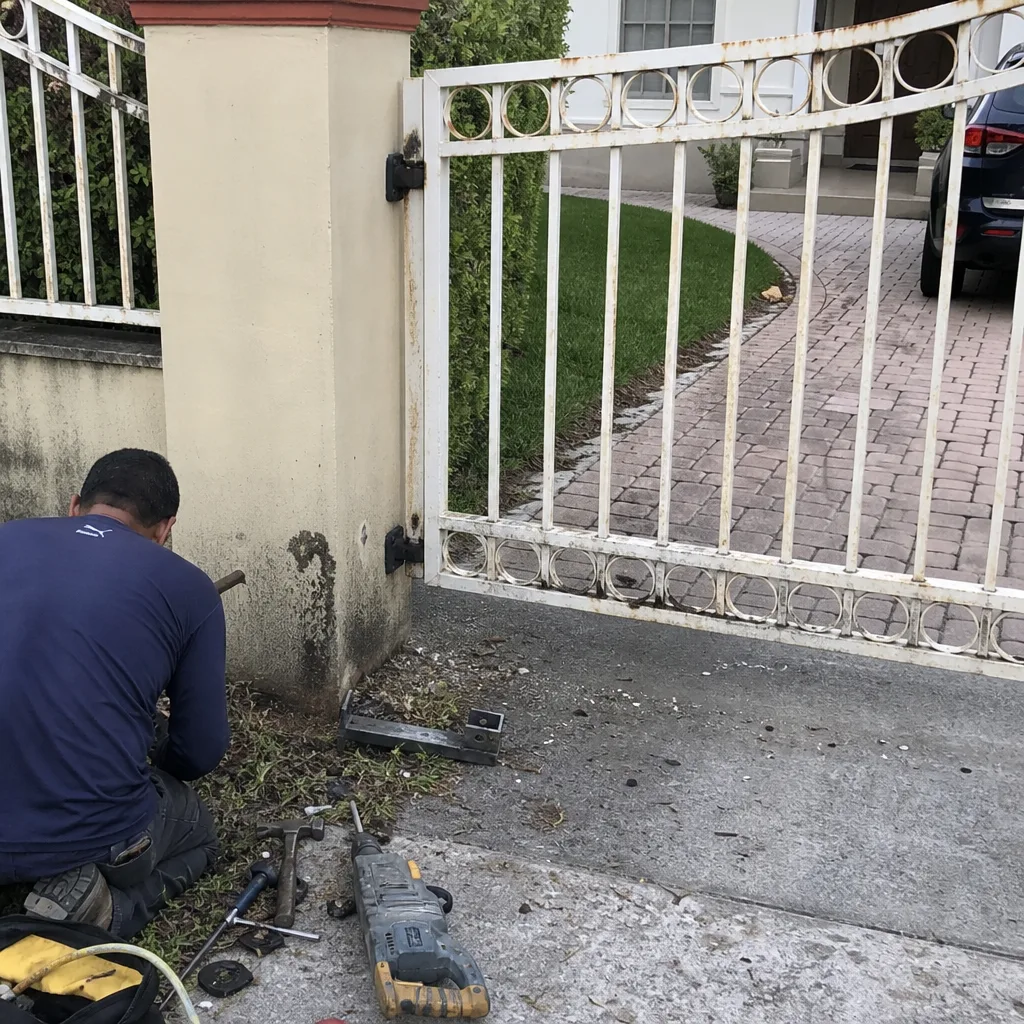 Before
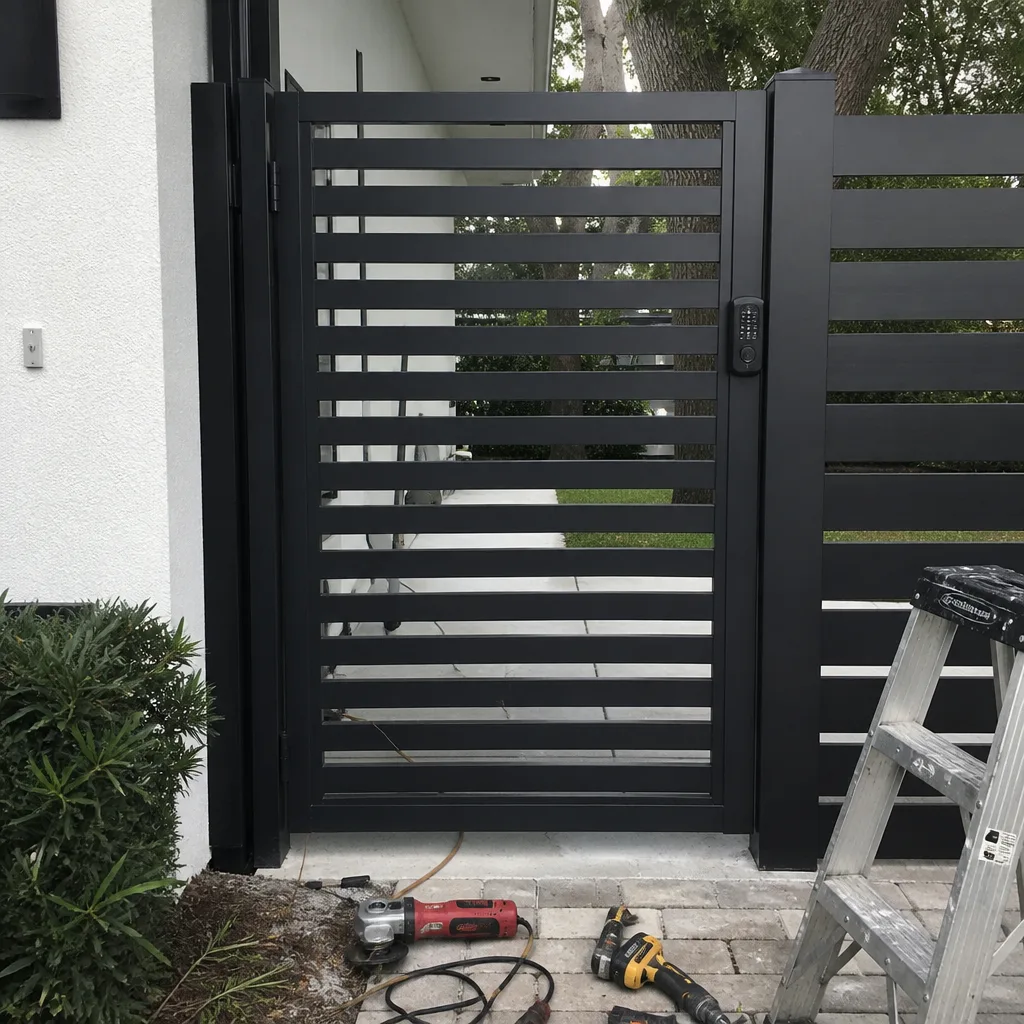 After
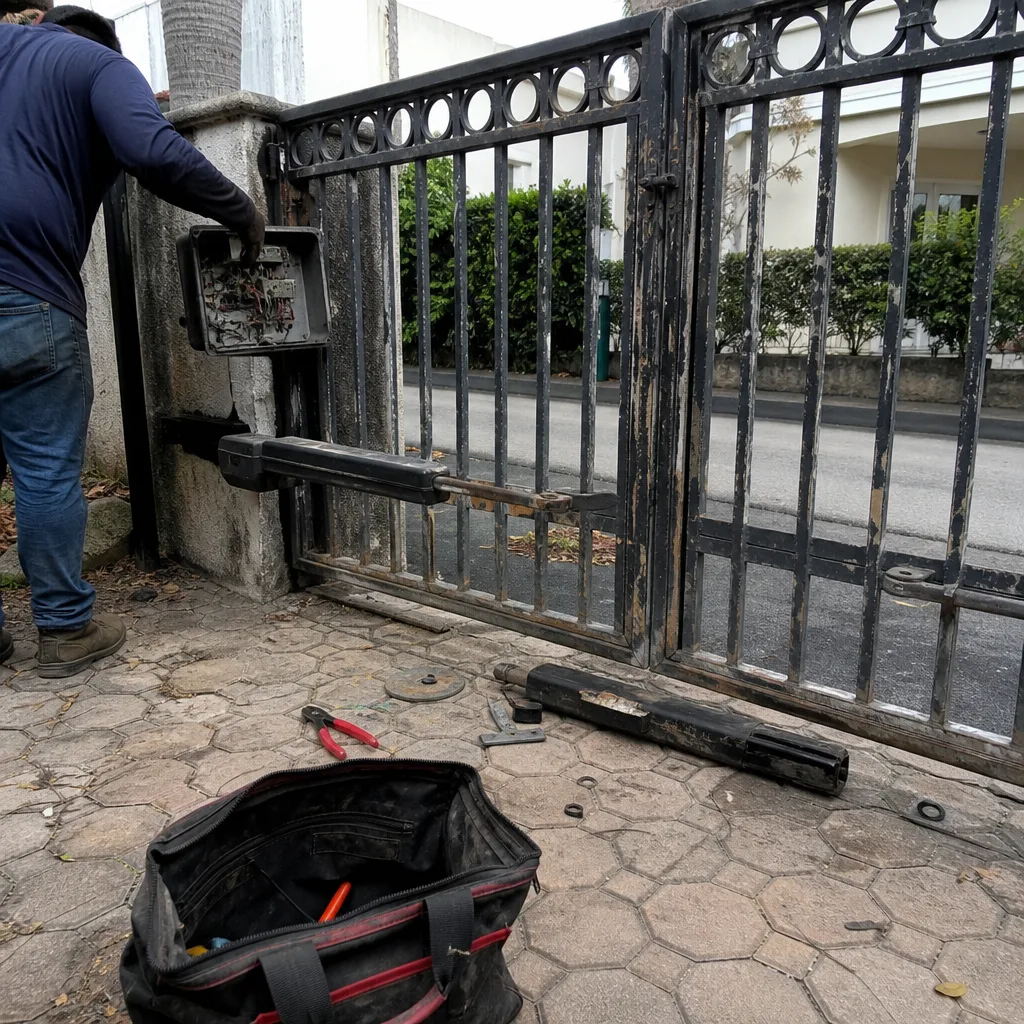 Before
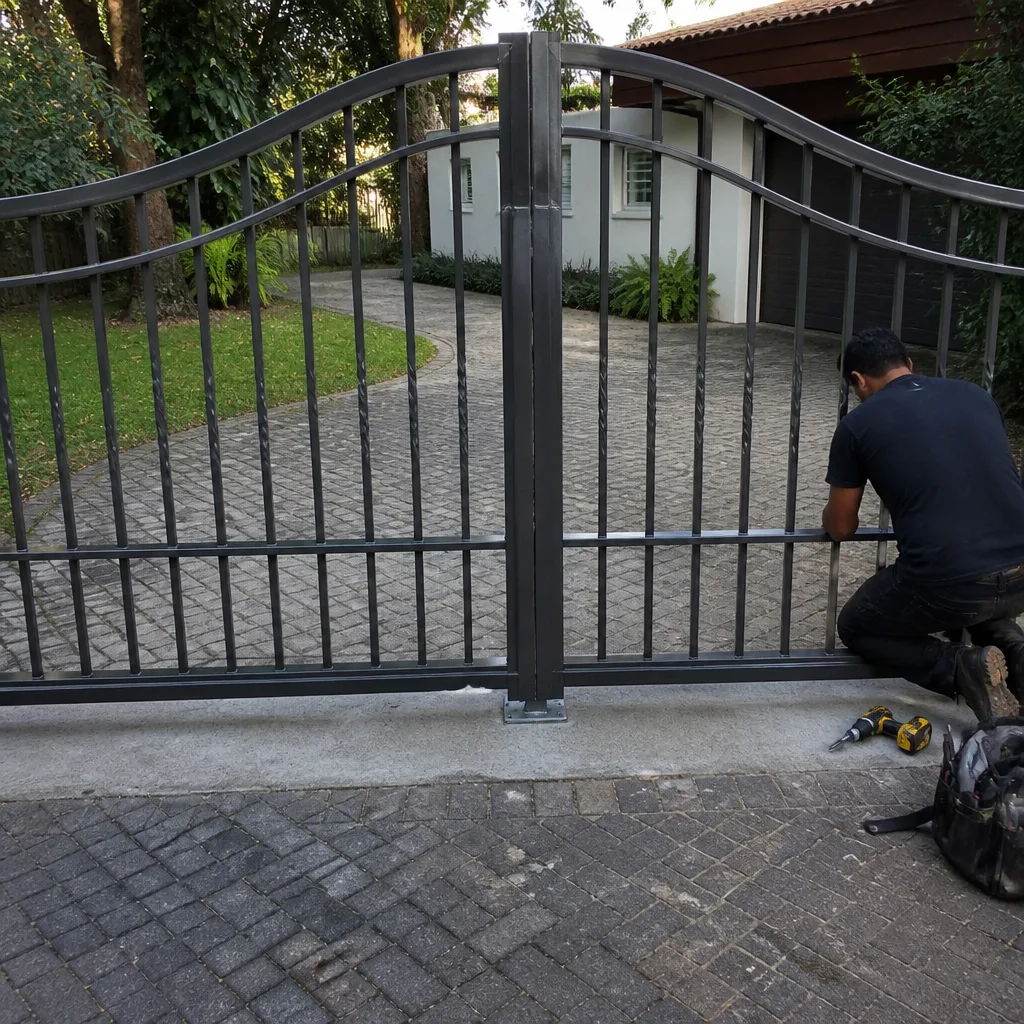 After
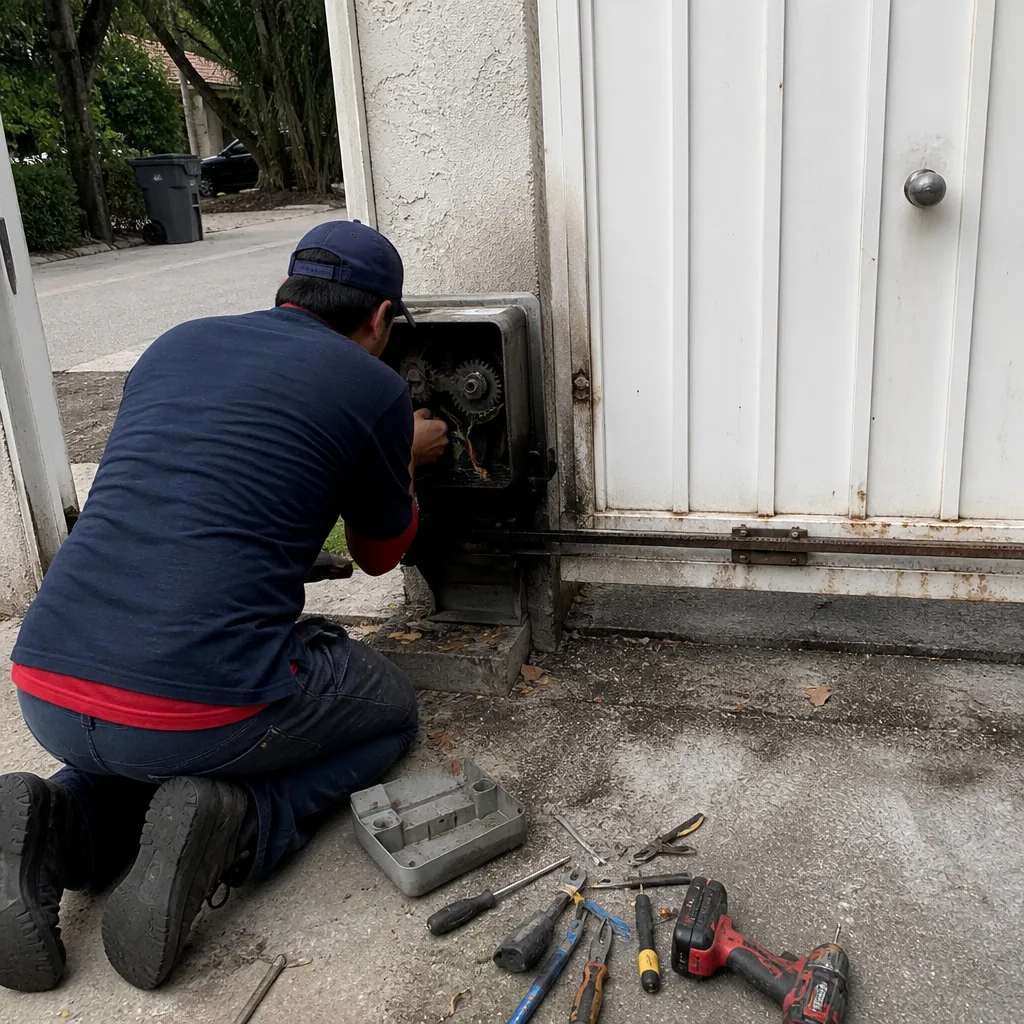 Before
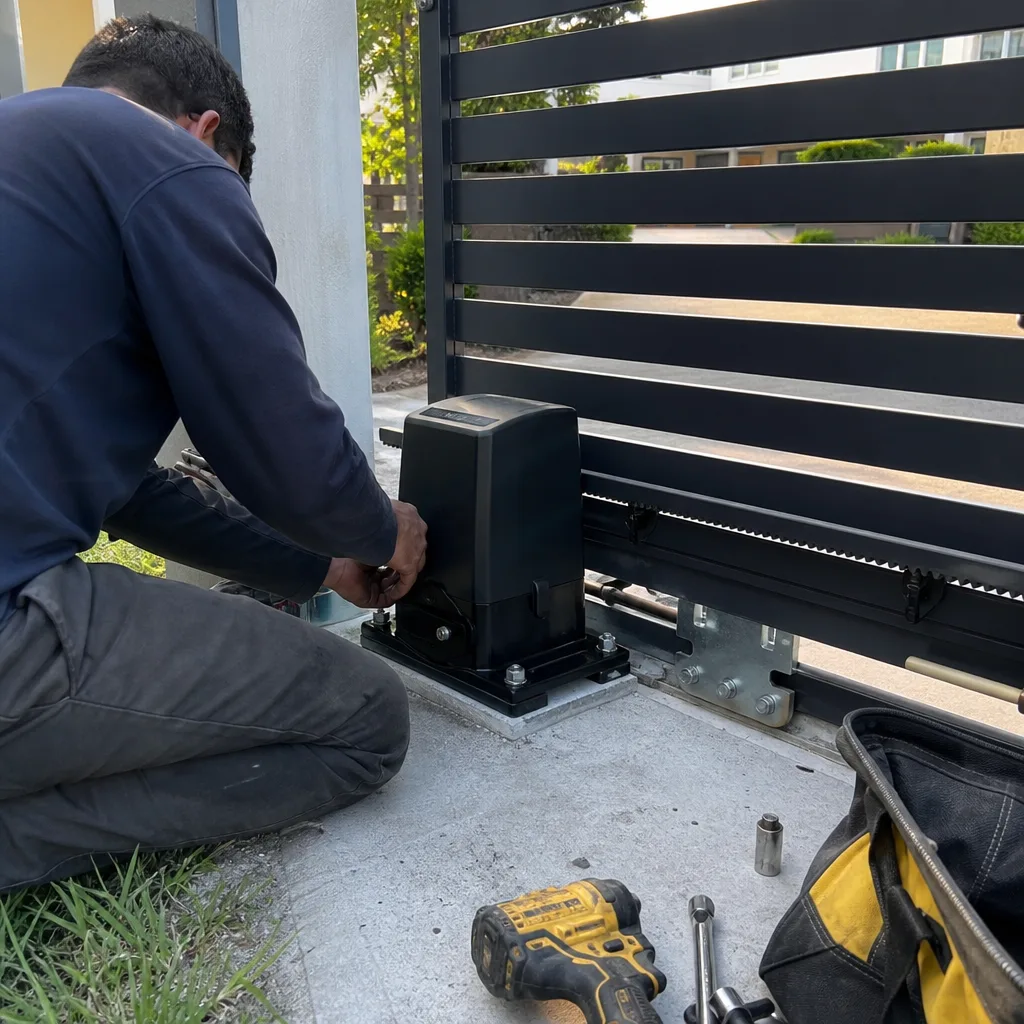 After