Last updated October 30, 2026
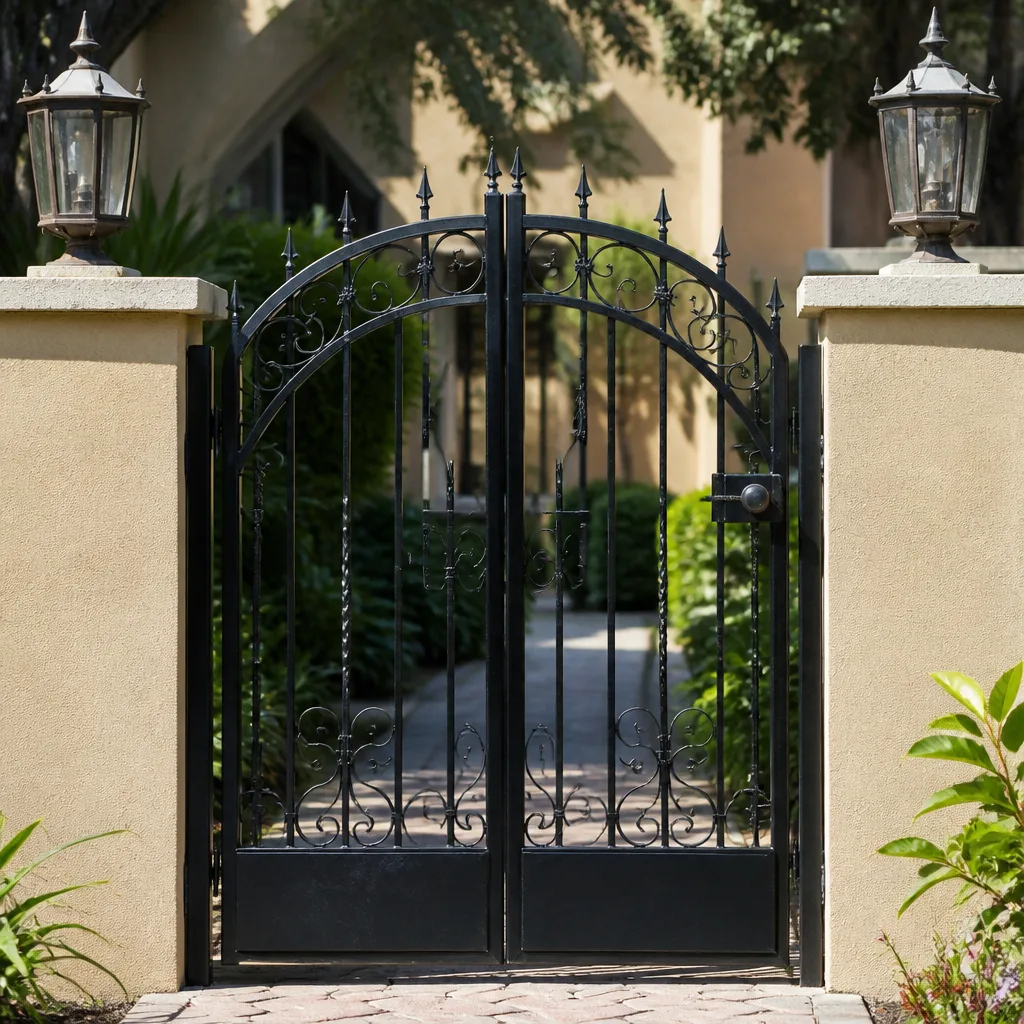 Wrought iron
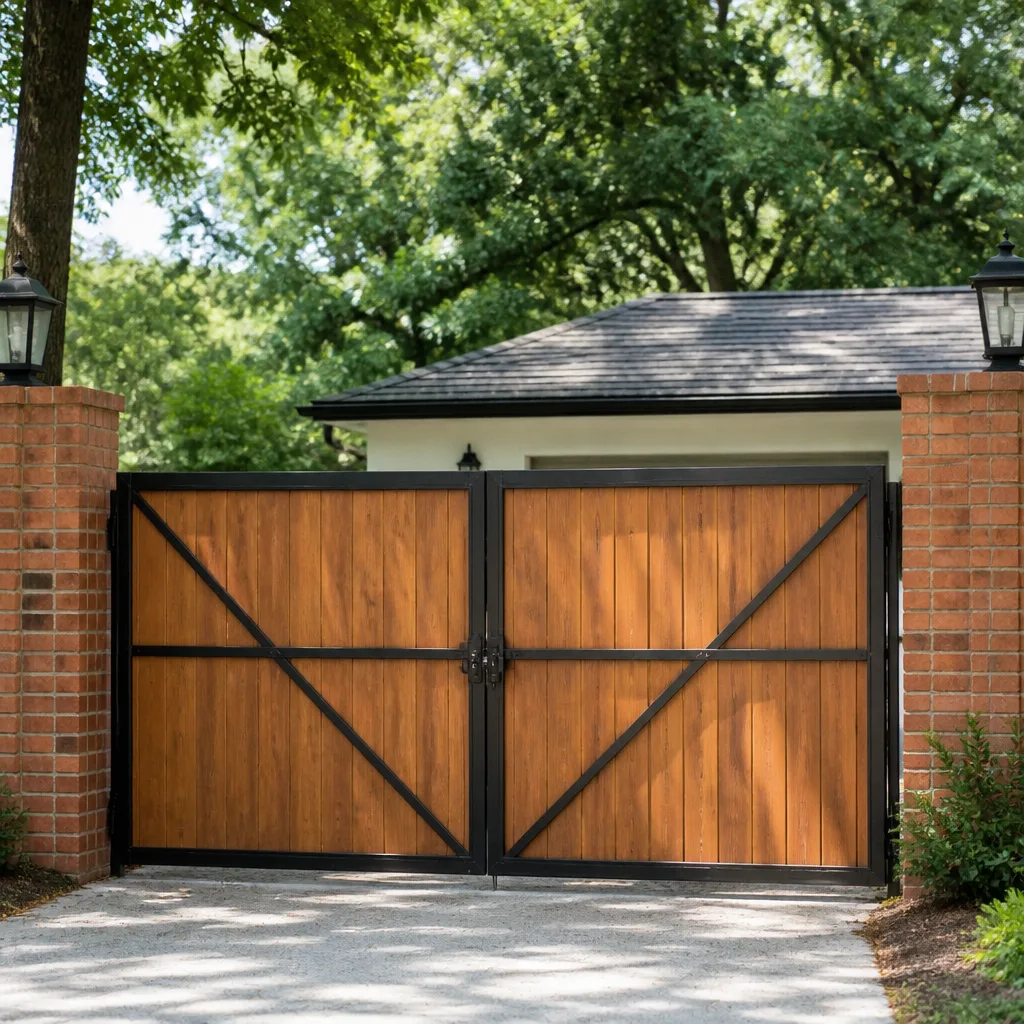 Wood & steel frame
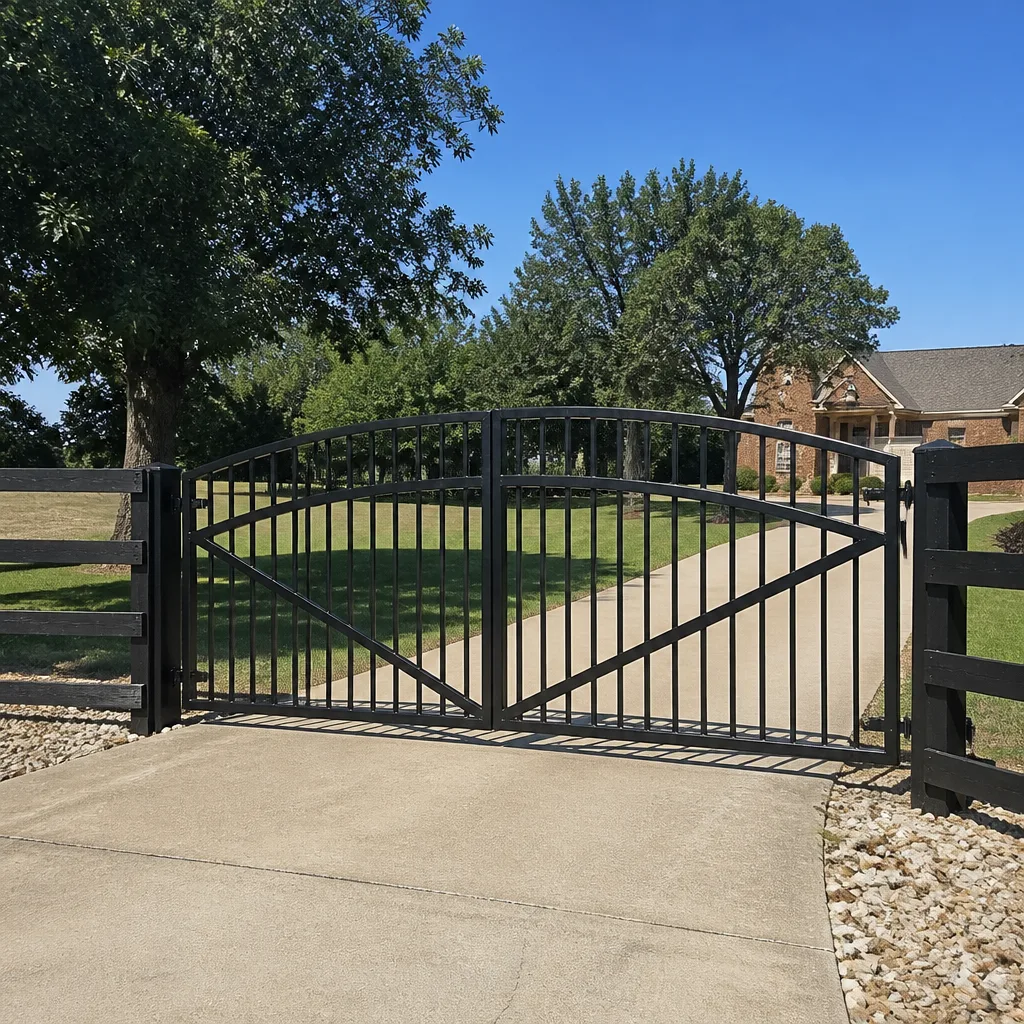 Farm & ranch
 Sliding driveway gates
 LiftMaster operators
Free on-site gate assessment - hinges, posts, and your LiftMaster or Nice gate operator checked before anything is quoted
The assessment is free and the quote is the invoice.
Get your free estimateGate Repair Permits, Codes & Inspections in FL: What You Need to Know
A homeowner in Hollywood replaced a gate operator after a storm, skipped the permit because “it’s just a motor swap,” and then discovered at closing that the unpermitted electrical work required a retroactive inspection that delayed the sale by three weeks. That three-week delay cost more than the operator itself. Florida’s gate permit requirements are widely misunderstood, and the confusion has a real cost: unpermitted repairs in Hollywood can trigger HOA fines, complicate home sales, and void operator warranties. This guide cuts through the ambiguity with a plain-language breakdown of when a permit is required, what triggers an inspection, and how Hollywood’s municipal rules sit within Broward County’s framework.
Quick Answer
Most structural gate repairs in Hollywood, FL do not require a municipal building permit, but any new electrical run or significant operator replacement typically requires a Broward County electrical permit. HOA approval is separate from municipal permitting, and you can need both. Post-hurricane emergency repairs have narrow safe-harbor provisions, but you must document the emergency correctly to claim them.
Styles & brands we work with
Table of Contents
- Permit vs. Inspection: What’s the Difference in Florida?
- Hollywood Municipal Permitting: What the City Actually Requires
- Broward County Electrical Permits: The Gate Operator Factor
- When a Repair Crosses Into a New Installation
- HOA Approval vs. Municipal Permitting: Why You Can Need Both
- Florida’s Post-Hurricane Safe Harbor Provisions for Gate Systems
- What a Broward County Gate Inspection Actually Covers
- Common Mistakes to Avoid
- When to Call a Professional
- Frequently Asked Questions
Permit vs. Inspection: What’s the Difference in Florida?
A permit is permission to do the work. An inspection is verification that the work was done correctly. They are not the same thing, and in Hollywood they come from different offices with different forms. A permit is issued before work begins. An inspection happens after the work is complete, and it must be scheduled by the permit holder or the contractor who pulled the permit.
In Florida, permitting authority is split between the state, the county, and the municipality depending on the type of work. The Florida Building Code (FBC) is the statewide standard, but Broward County and the City of Hollywood both have local amendments and their own administrative processes. For gate work specifically, the relevant codes are typically the FBC Chapter 1 (Scope and Administration), the National Electrical Code (NEC) as adopted by Florida, and any local Hollywood ordinances that address fencing, walls, and access structures.
The confusion we see most often at Hacienda Gate Repair home is homeowners assuming that because they did not need a permit for a fence, they do not need one for an electric gate. A fence is a structure. An electric gate is a structure plus an electrical system plus a moving mechanical assembly. The electrical component is what triggers the county-level permit requirement in most cases, even when the municipal building department says no permit is needed for the gate itself.
Here is the simple breakdown:
- Building permit (City of Hollywood): Required for structural gate installations, new gate frames, concrete work, and any gate that exceeds height or setback thresholds in the local zoning code.
- Electrical permit (Broward County): Required for new electrical runs to a gate operator, new operator installations that connect to line voltage, and significant rewiring of existing automated gate systems.
- No permit (typically): Replacing a hinge, adjusting a gate wheel, repairing a broken weld on an existing gate frame, replacing a battery in a solar operator, and other non-structural, non-electrical repairs.
If you are not sure which category your repair falls into, the safest move is to call the Hollywood Building Division and ask. They answer these questions daily and would rather tell you no permit is needed than deal with a retroactive permit months later.
Hollywood Municipal Permitting: What the City Actually Requires
Hollywood operates its own Building Division under the umbrella of the city’s Development Services Department. The city enforces the Florida Building Code with local amendments specific to Hollywood’s zoning districts, coastal location, and wind-load requirements. For gate work, Hollywood’s primary concern is structural: setbacks, height limits, wind resistance, and whether the gate impedes emergency access.
In Hollywood, a building permit is generally required when:
- A new gate is installed that did not previously exist, especially at a driveway entry or a pedestrian access point.
- A gate is relocated or its dimensions change significantly, including widening a driveway entry to accommodate a new gate.
- Concrete footings or piers are poured for new gate posts, which is standard practice for Gate Installation in Hollywood.
- A gate is added to a property in a historic district, which triggers additional design review through Hollywood’s Historic Preservation Board.
- The gate exceeds six feet in height or sits in a front-yard setback where local zoning restricts structures above a certain height.
Hollywood’s permit fees for gate work are calculated based on the valuation of the project, including labor and materials. The city’s valuation schedule is updated annually, and for a typical residential gate installation, the building permit fee often ranges from $150 to $400 depending on the scope. You will not know the exact number until the application is reviewed, but that range applies to most single-family residential gate projects in Hollywood.
One thing that surprises Hollywood homeowners: the city requires a site plan drawing for most new gate installations, even residential ones. It does not need to be architect-drafted, but it must show the property lines, the gate location, the setback distances, and the swing or slide path of the gate. A hand-drawn plan on graph paper is acceptable for most residential projects, as long as the measurements are accurate.
Hollywood also enforces its own wind-load requirements, which are stricter than unincorporated Broward County due to the city’s coastal exposure. Any new gate in Hollywood must be engineered to withstand the wind speeds prescribed in the FBC’s High Velocity Hurricane Zone (HVHZ) provisions, which apply to all of Broward and Miami-Dade counties. This is not a paperwork formality: a gate that fails in high winds becomes a projectile, and Hollywood inspectors take this seriously.
Broward County Electrical Permits: The Gate Operator Factor
Here is where most Hollywood homeowners get tripped up. The City of Hollywood issues building permits, but electrical permits for work within the city are handled by Broward County’s Building Code Services Division under an interlocal agreement. That means an electric gate operator installation requires two separate interactions: a Hollywood building permit for the gate structure, and a Broward County electrical permit for the wiring and operator connection. Two offices, two forms, two fee schedules.
A Broward County electrical permit is required when:
- A new gate operator is hardwired to a 120V or 240V line-voltage circuit, which covers most AC-powered operators from DoorKing, Elite, and Viking that are installed on residential and commercial gates in Hollywood.
- A new electrical branch circuit is run from a panel to a gate location, regardless of whether the operator is 120V or low-voltage.
- An existing underground electrical feed to a gate is replaced or significantly repaired, including trenching work to replace damaged conduit.
- A gate operator is upgraded from battery or solar power to line-voltage power.
Low-voltage work is a gray area that generates a lot of questions. Replacing a low-voltage transformer or a battery backup on a Ghost Controls opener typically does not require an electrical permit, because the work stays on the low-voltage side of the system. Replacing a keypad, a safety sensor, or a solar panel also falls outside the permit requirement, as long as the line-voltage wiring is not touched.
Broward County’s electrical permit fees are based on the number of circuits and outlets involved. A single new circuit for a gate operator typically lands between $80 and $150 in permit fees, not including the cost of the electrical contractor who pulls the permit.
At Electric Gate Repair in Hollywood, we walk every customer through this exact question before work starts, because the answer changes based on the operator brand, the power source, and whether the feed is new or existing. Guessing wrong here is how homeowners end up with unpermitted work that surfaces at closing.
When a Repair Crosses Into a New Installation
The Florida Building Code draws a specific line between repair and new work, and that line is not where most homeowners think it is. Replacing like-for-like equipment is usually a repair. Changing the nature or capacity of the system is usually a new installation. The distinction matters because it determines whether full permitting applies.
Under the FBC’s existing-building provisions, a repair is “the reconstruction or renewal of any part of an existing building for the purpose of its maintenance.” An alteration is “any construction or renovation to an existing structure other than repair or addition.” A gate operator replacement that is functionally identical to the old one, same voltage, same mounting configuration, same power draw, is a repair. A gate operator replacement that changes the voltage, adds capacity, or moves the operator to a different location is an alteration, and alterations trigger permitting.
Here is the practical application for Hollywood homeowners:
- Replacing an operator with the same model or a direct equivalent: Generally a repair. No electrical permit needed if the line-voltage wiring is not modified.
- Replacing an operator with a different voltage class, such as swapping a 120V Viking operator for a low-voltage Ghost Controls system: This is an alteration. The electrical permit is required because the circuit itself is being modified or abandoned.
- Moving a gate operator from one post to another, or changing a swing gate to a slide gate: This is a new installation from a code standpoint. The concrete work, the operator mounting, and the electrical feed all require permits.
- Adding a new gate where no gate previously existed: This is always a new installation, even if the gate itself is used. The permit triggers are structural, electrical, and zoning-based.
The “like-for-like” standard is the critical test. If you can describe the new equipment as a direct replacement for the old equipment without changing any dimensions, voltages, or locations, you are probably in repair territory. If the description includes the word “upgrade,” “relocate,” “convert,” or “add,” assume you are in installation territory and budget for permits accordingly.
We have seen Hollywood homeowners replace an operator after hurricane damage, assume the repair exemption applied, and then learn at a refinance that the new unit was a different voltage class. The retroactive permitting process took six weeks and required opening the electrical feed for inspection. The repair exemption would have applied if the replacement had been functionally identical.
HOA Approval vs. Municipal Permitting: Why You Can Need Both
Hollywood has more gated communities and HOA-governed neighborhoods than almost any city in Broward County. Emerald Hills, Hollywood Lakes, Three Islands, and the numerous condo communities along the beach all have their own architectural review processes. HOA approval and municipal permitting are separate requirements, governed by separate documents, with separate timelines. Needing one does not exempt you from the other.
The order matters. Here is the sequence that avoids redoing work:
- Check the HOA’s governing documents first. The Declaration of Covenants, Conditions, and Restrictions (CCRs) will specify what gate work requires architectural review. Many HOAs require approval for any gate modification visible from the street, even if the city requires no permit.
- Submit to the HOA architectural committee. If a new gate or a visible operator change is planned, present the design, materials, paint color, and operator brand to the HOA before pulling a city permit. HOAs can and do reject gate designs that the city would approve.
- Pull municipal and county permits after HOA approval. The city will not ask about HOA approval, and the HOA will not check for city permits. But doing both in this order means the HOA has already signed off on the design before you invest in permit fees.
- Schedule inspections after installation. Both the HOA (if they require a post-installation review) and the city or county inspector need to see the completed work. Coordinate these so the HOA review does not conflict with the county’s inspection window.
Skipping the HOA step is the most common mistake we see in Hollywood’s gated communities. A homeowner gets a city permit, installs a beautiful new gate, and then the HOA issues a violation letter because the gate color does not match the community’s approved palette. The homeowner now has an inspected, permitted gate that must be repainted or replaced to satisfy the HOA. The city inspection happened first, but the HOA approval should have.
There is no central database that cross-references HOA rules with municipal permits. The burden is on the homeowner to know both sets of requirements, which is why we tell every Hollywood customer in an HOA-governed community to start with the HOA’s architectural committee before we even quote the work.
Florida’s Post-Hurricane Safe Harbor Provisions for Gate Systems
Florida law contains specific provisions that allow emergency repairs to proceed without a permit in the immediate aftermath of a hurricane or declared disaster. These safe-harbor rules exist so that homes can be secured quickly, and they apply to gate systems that are damaged by wind, flooding, or flying debris during a named storm. But the provisions are narrower than most homeowners assume, and the documentation requirements trip up people who try to claim the exemption retroactively.
The relevant framework is Florida Statutes Chapter 553 and the FBC’s emergency repair provisions, which allow for the immediate repair of damage that creates a safety hazard. For a gate, the safety hazard is typically a gate that has come off its track, a gate that no longer secures the property, or an operator that is shorting and creating a fire risk.
To claim the safe-harbor exemption correctly, you need to document three things:
- The emergency was real. Photograph the damage before any work begins. Photos of a bent gate, a broken track, or a flooded operator enclosure establish that the repair was emergency-driven, not elective.
- The work was limited to hazard abatement. The safe harbor covers repairs that make the property safe again. It does not cover upgrades, improvements, or replacements with different equipment. If your damaged Elite operator is replaced with a new Elite unit of the same model, the exemption applies. If it is replaced with a newer, higher-capacity model, the permit is still required.
- The permit was applied for afterward. The safe harbor does not eliminate the permit requirement. It delays it. A permit application for the completed work must be filed with the appropriate authority within the statutory window, which in Broward County is typically 30 days after the emergency repair is completed. Missing that window means the work is unpermitted, with all the consequences that carries.
For Hollywood homeowners, the practical takeaway is this: if a hurricane rips your gate off its hinges, secure the property first, document everything, and then call a gate specialist who knows the Broward County process. For Gate Repair Warning Signs: A Hollywood Homeowner’s Reference Guide, see our dedicated resource. The safe harbor protects you from penalties for securing your home quickly. It does not protect you from penalties for ignoring the permit process entirely.
We have helped Hollywood customers through this after every major storm season. The ones who take photos before touching anything and then file the permit paperwork within the window have a smooth experience. The ones who assume the storm erased the paperwork requirement spend months untangling the mess later.
What a Broward County Gate Inspection Actually Covers
Most Hollywood homeowners have never seen a gate inspection checklist. They know a city or county inspector will come out, but they do not know what the inspector is looking for, which means they do not know how to prepare. Based on our experience with Broward County gate inspections, here is what the inspector actually checks.
For a structural gate inspection, the Broward County or Hollywood inspector will verify:
- Footings and post depth: The inspector verifies that gate posts are set at the depth specified in the approved plans and that the concrete has cured adequately. In Hollywood’s sandy coastal soil, under-sized footings are the most common structural failure inspectors flag.
- Wind-load compliance: The gate must be rated for the HVHZ wind speeds specified in the Florida Building Code. The inspector checks the gate’s engineering documentation, not just its appearance.
- Swing and slide clearances: The gate must operate through its full range of motion without striking the driveway, the post, or any adjacent structure. The inspector will cycle the gate manually and under power if an operator is installed.
- Setback compliance: The gate must sit within the setbacks approved on the site plan. If the gate encroaches on the public right-of-way or a neighbor’s property, the inspection fails.
For an electrical gate inspection, the Broward County electrical inspector will verify:
- Circuit protection: The gate operator circuit must have the correct breaker size and GFCI protection where the NEC requires it. Outdoor circuits serving gate operators are a common GFCI failure point.
- Grounding and bonding: The operator enclosure, the gate frame, and any metallic conduit must be properly grounded. In South Florida’s lightning-heavy environment, grounding deficiencies are both a code violation and a real safety hazard.
- Safety device integration: If the operator has safety edges, photo eyes, or a reversing mechanism, the inspector verifies that these devices are installed and functional. The UL 325 standard for automatic gate operators is enforced through the building code.
- Wiring methods: All outdoor wiring must be in approved conduit, with proper burial depth for underground runs. In Hollywood, underground feeds that are not deep enough to avoid future landscape work are a frequent inspector’s note.
UL 325 compliance is worth a specific mention, because it is the standard Hollywood homeowners are least likely to have heard of. UL 325 is the safety standard for automatic gate operators, and it mandates entrapment protection: the gate must sense an obstruction and reverse or stop before injuring a person or pet. A gate that does not meet UL 325 entrapment requirements will fail inspection no matter how well everything else is done.
An inspection typically takes 30 to 60 minutes for a residential gate. The inspector issues a pass, a conditional pass with minor corrections, or a fail with a reinspection requirement. Reinspection fees apply, so the goal is to pass on the first visit, which means the installer needs to know the checklist before the inspection is scheduled.
Common Mistakes to Avoid
- Assuming a “motor swap” never needs a permit. If the replacement operator is a different voltage class or requires new line-voltage wiring, a Broward County electrical permit is required even if the gate frame itself is untouched.
- Skipping HOA approval because the city issued a permit. The city and the HOA are separate authorities with separate requirements. A city-approved gate that violates HOA standards still gets a violation letter.
- Waiting too long to file the safe-harbor permit after hurricane repairs. The safe-harbor window in Broward County is typically 30 days. Missing it converts an emergency repair into unpermitted work.
- Confusing the Hollywood Building Division with Broward County’s electrical permitting office. They are not the same office, and a Hollywood building permit does not cover the electrical work on a gate operator.
- Underestimating wind-load requirements. Hollywood’s HVHZ wind-load standards are stricter than inland Florida, and a gate that fails wind-load review will not pass inspection regardless of how nice it looks.
- Not documenting pre-repair damage with photos. Without photographic evidence, a post-storm repair cannot be verified as emergency work, which nullifies the safe-harbor protection.
- Assuming low-voltage work always qualifies for the repair exemption. Low-voltage components like sensors and keypads typically do not require permits, but the line-voltage feed that powers them does.
When to Call a Professional
If your gate in Hollywood has an operator that will not respond, a track that has come loose, or a post that has shifted after storm season, the permitting question is secondary to the safety question. A gate that fails to reverse on obstruction is a hazard, not an inconvenience. A gate that has come off its track can fall, and a line-voltage operator with damaged wiring can short. These are not DIY inspection items.
The practical threshold is this: if the repair touches line voltage, the gate’s structural integrity, or the UL 325 safety devices, call someone who does this work every day. At Hacienda Gate Repair, we service the major operator brands Hollywood homeowners actually have, including DoorKing, Elite, Viking, and Ghost Controls, and we know which repairs trigger which permits in this city. Gate Repair in Hollywood is what we do, and we are glad to walk through the permit question before any work begins. Hacienda Gate Repair offers free estimates in Hollywood – call (855) 362-1433.
Frequently Asked Questions
It depends on the voltage class and whether the line-voltage wiring changes. Replacing a 120V DoorKing operator with another 120V DoorKing operator typically does not require an electrical permit, but replacing a 120V operator with a low-voltage Ghost Controls system does, because the circuit itself is being modified. Call (855) 362-1433 and we will tell you which category your specific replacement falls into.
Building permit fees for residential gate work in Hollywood typically range from $150 to $400 based on project valuation, and Broward County electrical permits for a single new gate circuit usually run $80 to $150. Exact fees are calculated during application review. Call (855) 362-1433 for a free estimate that includes permit considerations.
Florida’s safe-harbor provisions allow emergency repairs to proceed without prior permit approval, but a permit application must be filed within roughly 30 days of completing the work in Broward County. The repair must be limited to hazard abatement, and you need photos documenting the storm damage. Upgrades and improvements do not qualify for the exemption.
For visible changes to a gate, many Hollywood HOAs require architectural review regardless of whether the city requires a permit. The HOA process should happen before you pull permits, so the design is approved before you invest in fees and installation. Check your CCRs first.
UL 325 is the safety standard for automatic gate operators that mandates entrapment protection, meaning the gate must reverse or stop when it detects an obstruction. A gate that does not meet UL 325 requirements will fail a Broward County inspection. The standard applies to all automated gates, regardless of operator brand.
We can handle the repair and guide you through the Hollywood and Broward County permit process, including which permits apply to your specific repair and in what order to file them. We work on Viking, DoorKing, Elite, and Ghost Controls operators, among others. Call (855) 362-1433 for a free estimate and a straight answer on permitting.
The Bottom Line
Florida’s gate permit rules are not inherently complicated, but they are split across multiple offices, multiple codes, and multiple triggers that are easy to miss. The line between repair and installation is the single most important distinction to understand. Like-for-like replacements are usually repairs. Anything that changes voltage, location, or capacity is usually an installation with full permitting. Hollywood homeowners also need to remember that HOA approval and municipal permitting are separate tracks, and that hurricane safe-harbor rules are a delay, not an elimination, of the permit requirement. When in doubt, document everything, call the right office, and get a straight answer from someone who works on these systems every day. For more guides & resources, explore our blog.
Written by the team at Hacienda Gate Repair, serving Hollywood since 2012.
See the difference
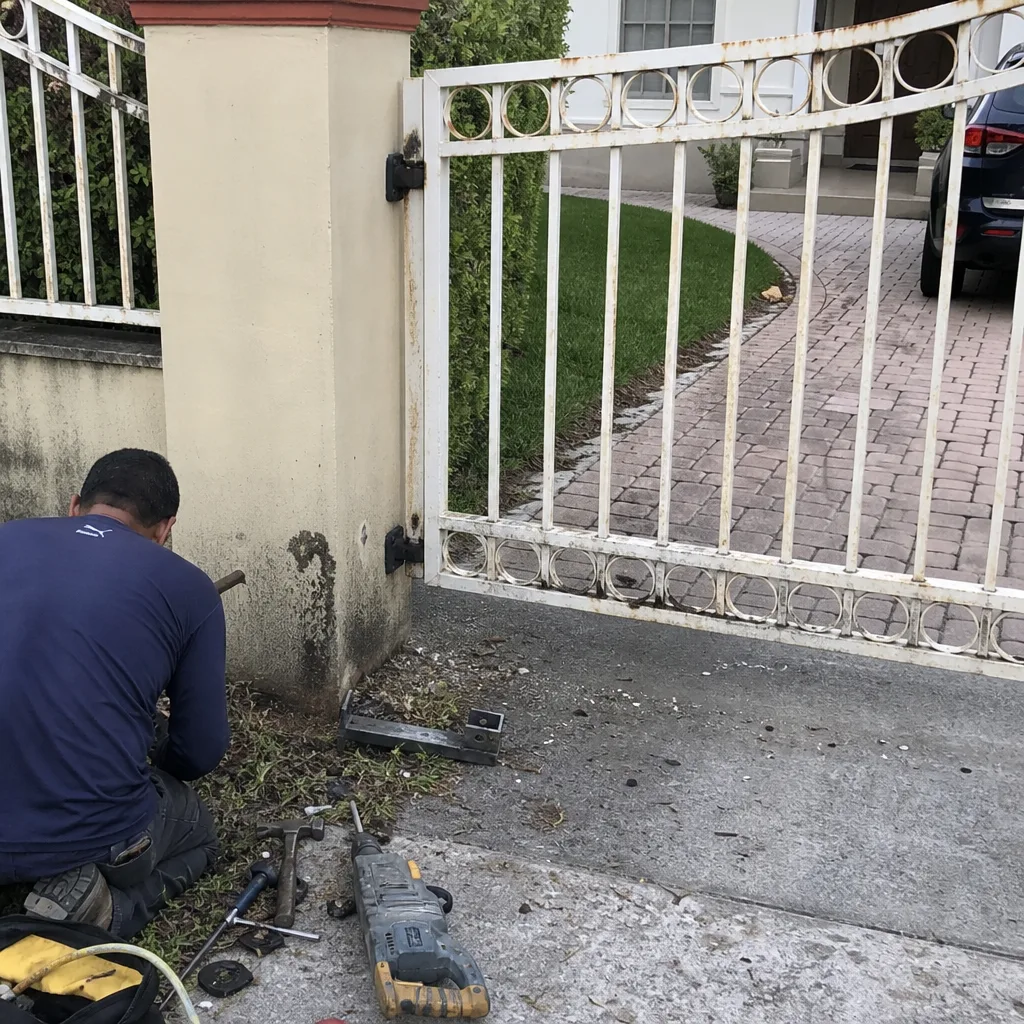 Before
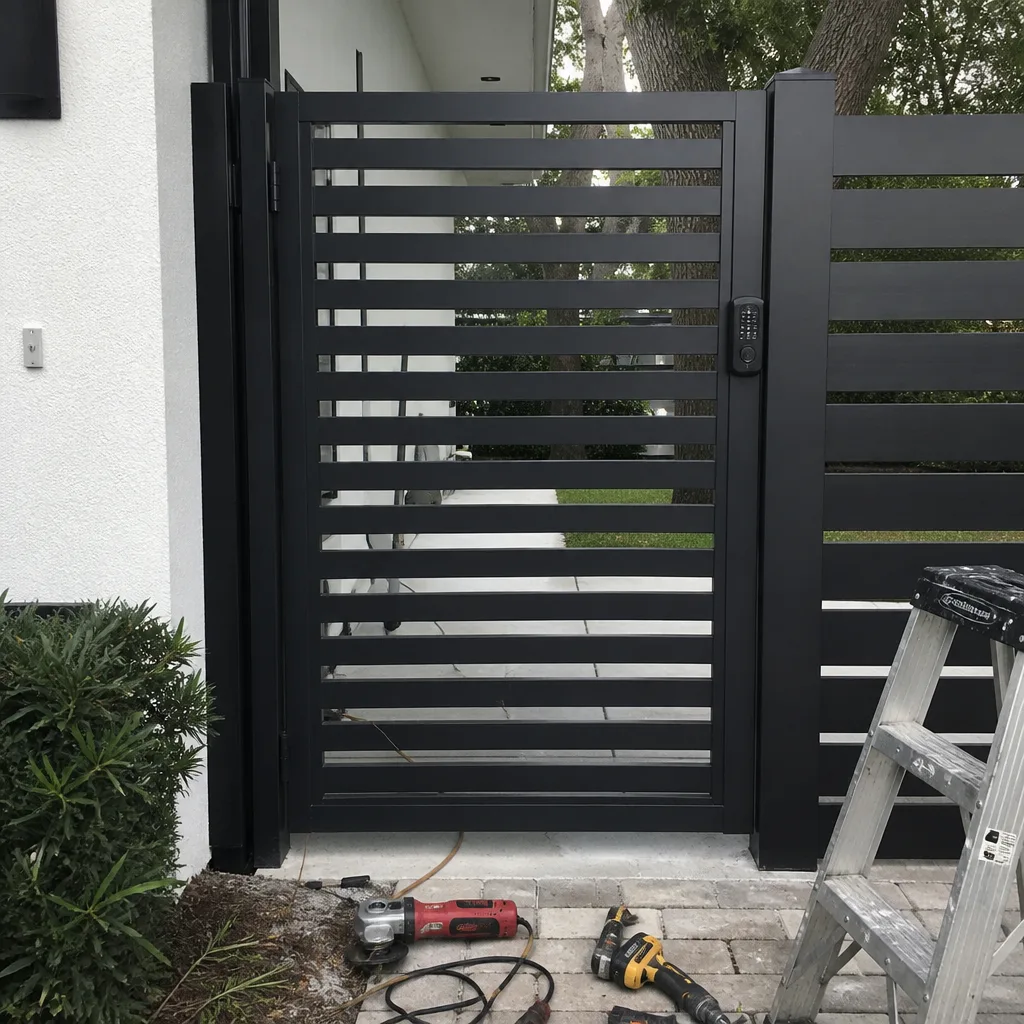 After
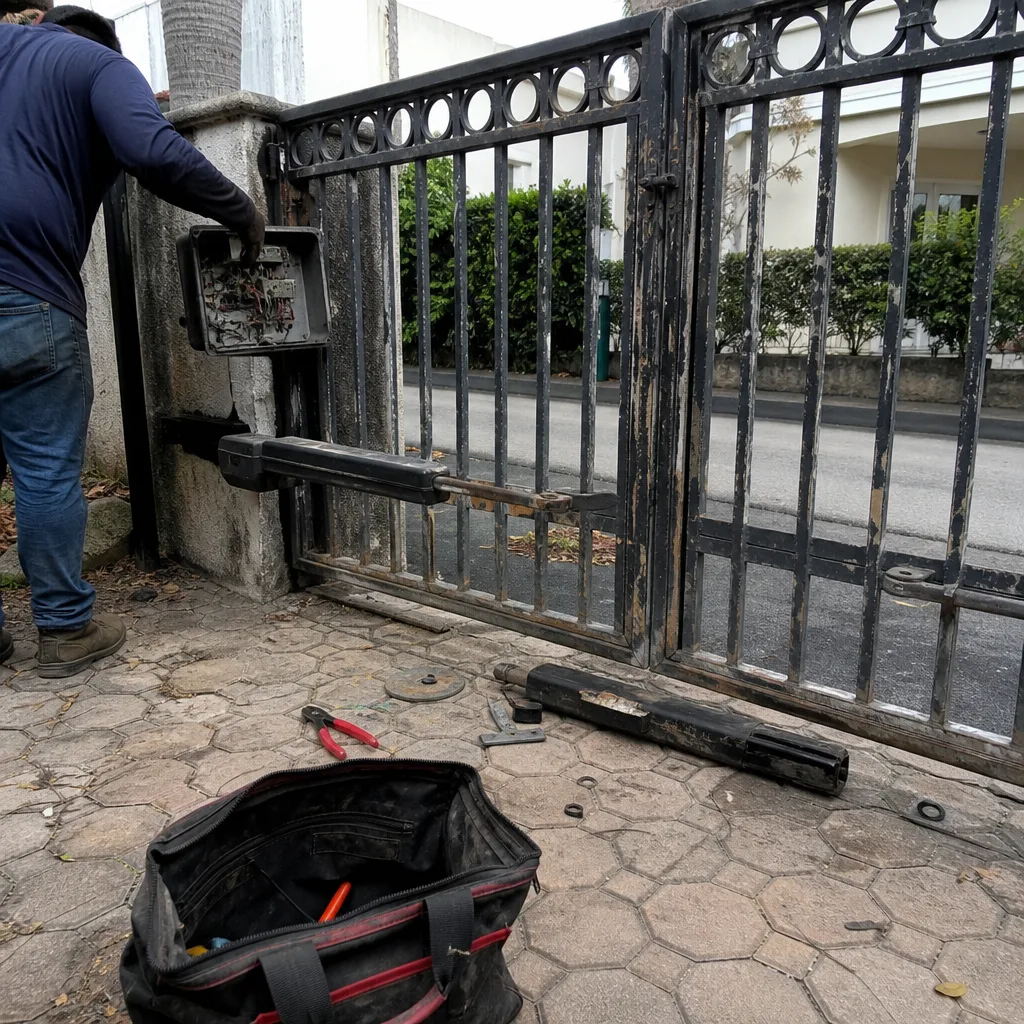 Before
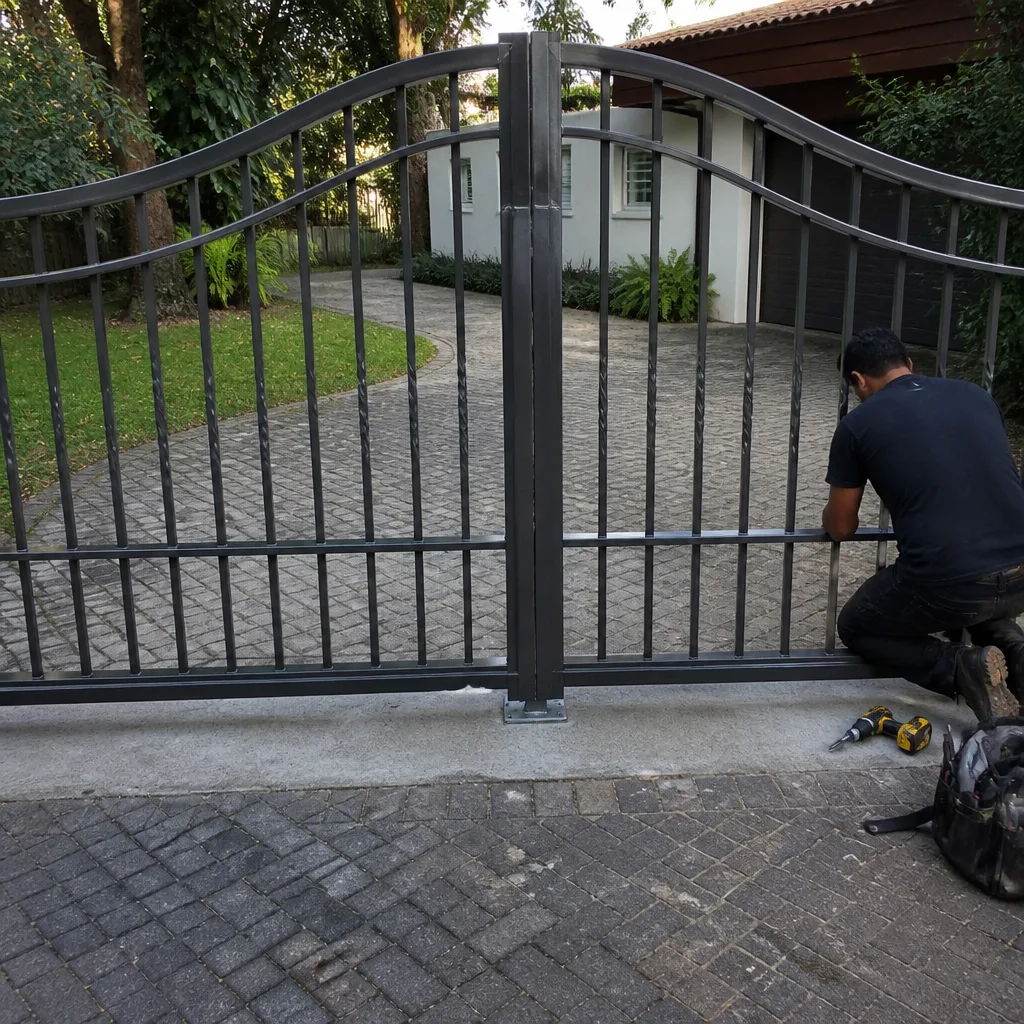 After
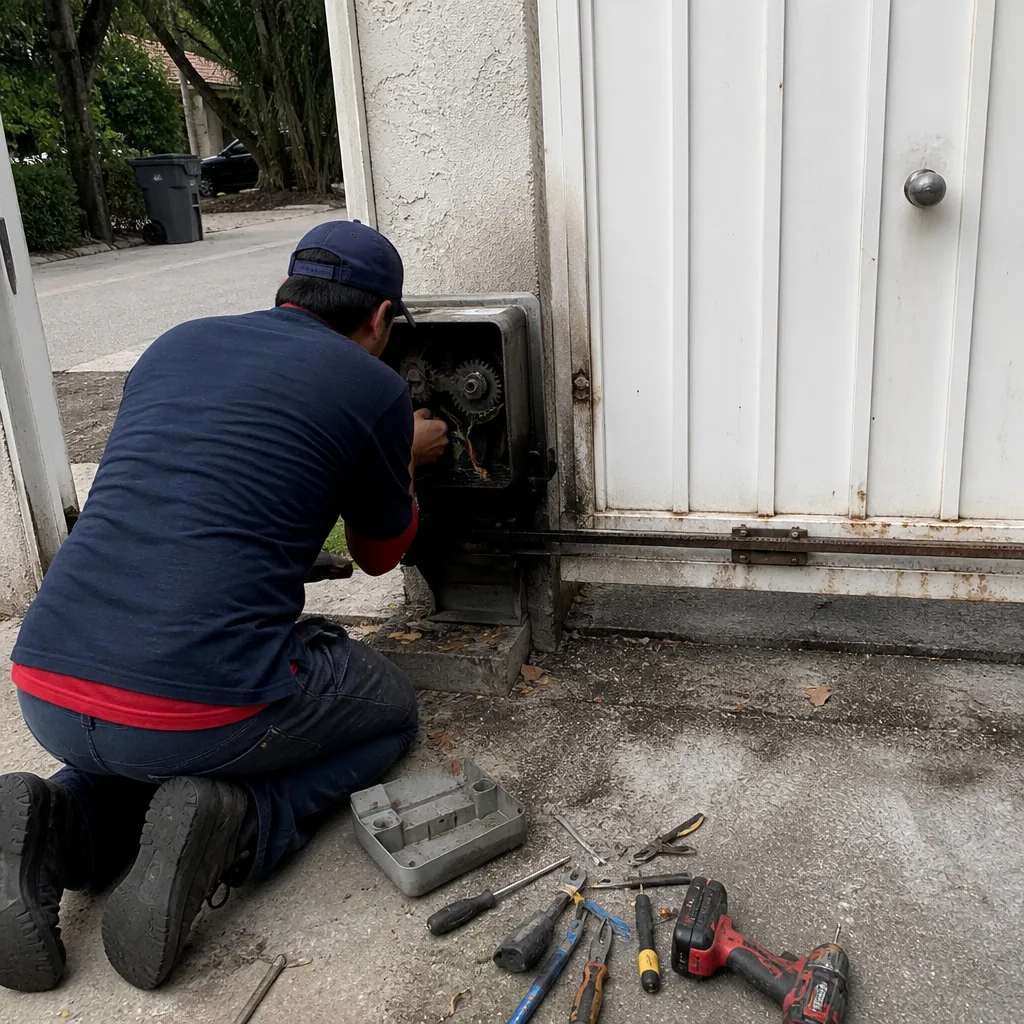 Before
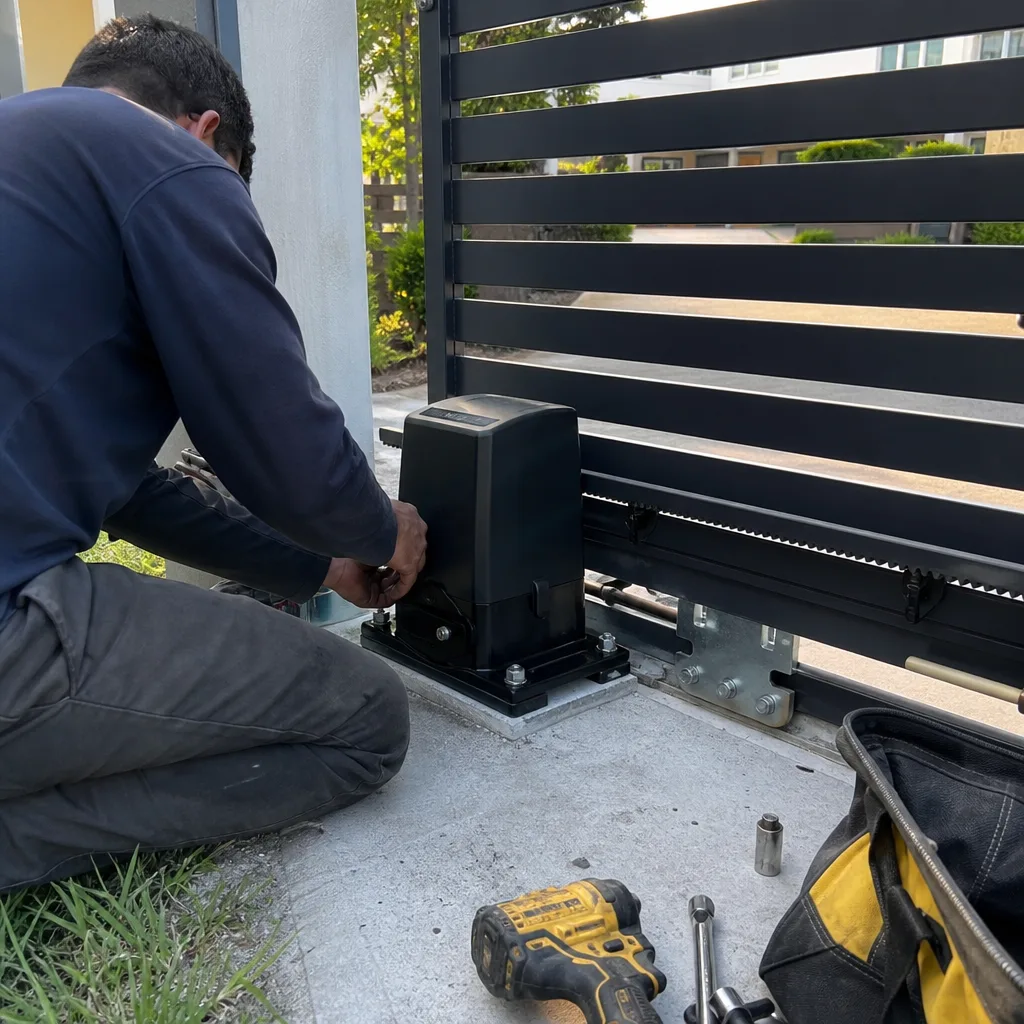 After