Last updated October 30, 2026
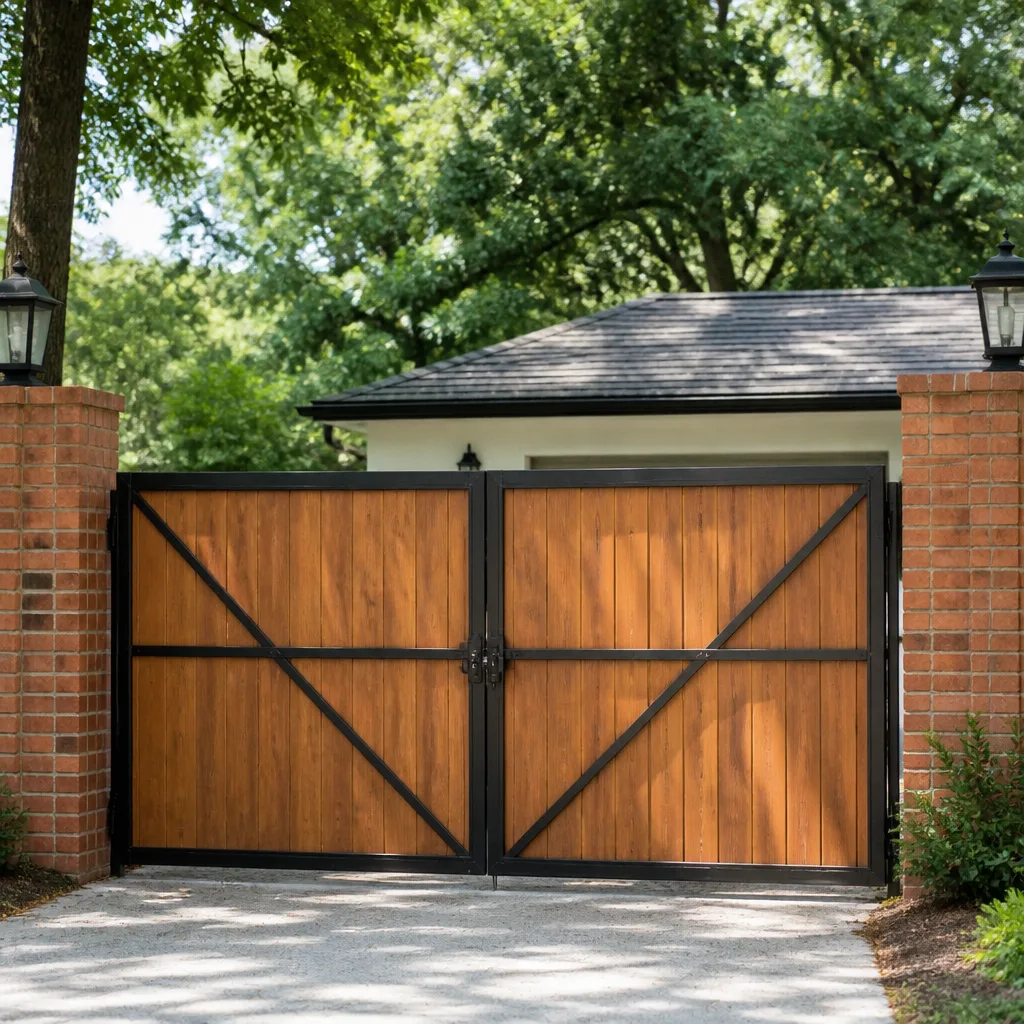 Wood & steel frame
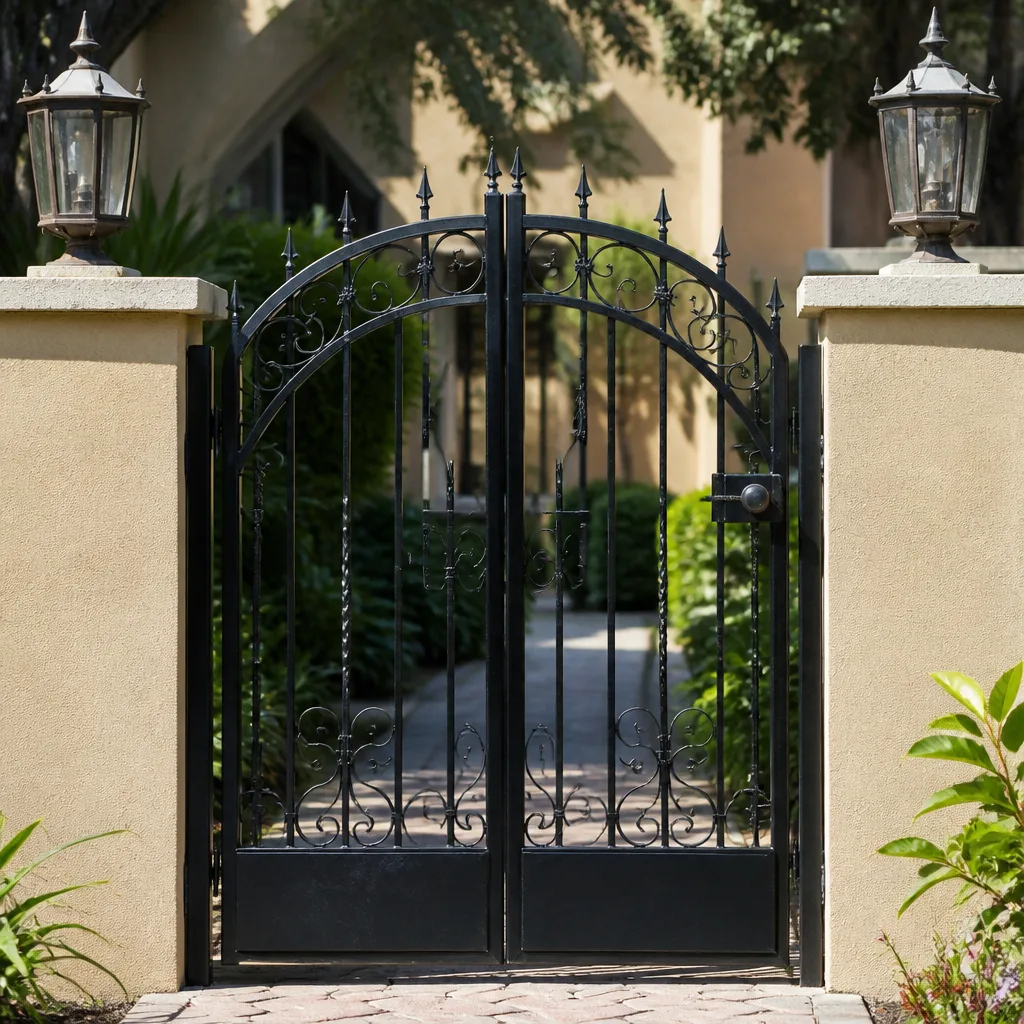 Wrought iron
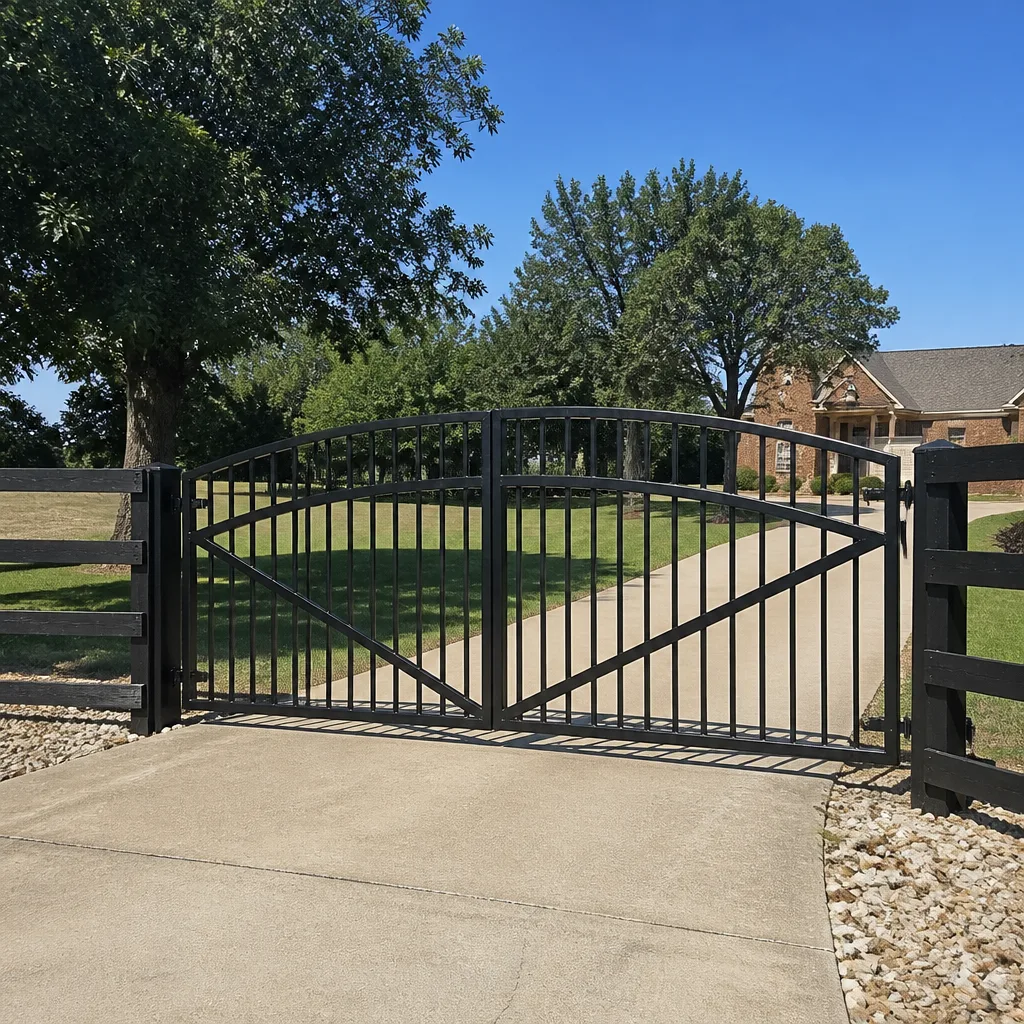 Farm & ranch
 Sliding driveway gates
 LiftMaster operators
Free on-site gate assessment - hinges, posts, and your LiftMaster or Nice gate operator checked before anything is quoted
The assessment is free and the quote is the invoice.
Get your free estimateGate Repair Warning Signs: A Hollywood Homeowner’s Reference Guide
A gate that hesitates for two seconds before moving isn’t “just slow.” It’s an operator drawing excess current trying to move a gate whose hinge or track resistance has increased, and that symptom has a predictable end date. Most gate failures in Hollywood give clear warnings two to eight weeks before they become emergency calls. The problem is that homeowners don’t know which symptoms are cosmetic and which are structural, so they ignore the wrong ones. This guide gives you a reference for reading exactly what your gate is telling you before it stops working entirely, and you can find more guides & resources on our blog. You’ll learn the difference between operator problems and mechanical problems, which sounds are normal and which aren’t, and how to document what you’re seeing so a repair call goes faster and costs less.
Quick Answer
The most common warning signs of an impending gate failure in Hollywood, FL include: the gate hesitating or pausing mid-travel, a grinding or groaning sound from the operator, visible sag on the hinge side, rust that flakes rather than just discolors the surface, and intercom or keypad systems that cut out intermittently. Operator issues typically stem from excess current draw caused by mechanical resistance, while mechanical issues come from hinge wear, post movement, or corrosion. If you notice any combination of these symptoms, call Gate Repair in Hollywood before the gate stops moving entirely, because failures rarely happen without warning.
Styles & brands we work with
Table of Contents
- Operator Warning Signs vs. Mechanical Warning Signs: Why the Difference Matters
- Hollywood-Specific Corrosion Indicators: Surface Rust vs. Active Pitting
- The Two Sounds Your Gate Should Never Make (and Three That Are Normal)
- Intercom and Access Control Warning Signs: Not Just a Technology Glitch
- How to Document Warning Signs Before You Call: Photos, Dates, and What Speeds Diagnosis
- What You Can Safely Check Yourself vs. What Needs a Gate Specialist
- Brand-Specific Warning Signs: What We See on FAAC, BFT, and Linear Operators in Hollywood
Operator Warning Signs vs. Mechanical Warning Signs: Why the Difference Matters
Here’s the distinction that saves Hollywood homeowners real money: your gate has two completely different systems that fail for completely different reasons, and they require completely different diagnostics. The operator is the motor, circuit board, and drive mechanism that moves the gate. The mechanical side is the gate itself: hinges, track, wheels, posts, and the structural frame. When you call a generalist, you might get someone who guesses at which system is failing. When you call a dedicated gate specialist, the first question is always “which system is talking to you right now?”
Operator warning signs include clicking sounds from the control box without gate movement, the gate starting to move and then reversing, partial travel where the gate stops halfway, and the operator running but the gate barely moving. These symptoms point to issues inside the operator itself: a failing capacitor, a worn drive gear, a control board that’s getting incorrect limit signals, or a motor drawing excessive current because mechanical resistance has increased. The last one is important. An operator rarely fails in isolation. It fails because something on the mechanical side started resisting, and the operator burned itself out trying to overcome that resistance.
Mechanical warning signs include visible sag on the hinge side of a swing gate, the gate scraping the ground or the concrete, a slide gate that shudders as it moves along the track, and posts that lean even slightly. In Hollywood, the combination of coastal humidity and occasional heavy rain accelerates these mechanical problems faster than inland areas. Hinges rust, track rollers corrode, and the constant moisture works its way into welds. We see gates where the operator gets blamed for a failure that actually started as a hinge that hadn’t been lubricated or replaced in years.
Here’s the thing that matters when you’re deciding what to do: a gate specialist can fix both sides of the system. One call covers the gate and the operator. If you call a fencing company, they’ll look at the structure and tell you to call an electrician for the operator. If you call an electrician, they’ll look at the operator and tell you to call a fencing company for the mechanical side. We work on your brand of operator and your gate structure, so the diagnosis doesn’t fall between two contractors.
Hollywood-Specific Corrosion Indicators: Surface Rust vs. Active Pitting
Hollywood’s climate does something very specific to metal gates that homeowners in drier climates don’t have to think about. For year-round maintenance tips, see our Seasonal Gate Repair Care for Hollywood: Year-Round Homeowner’s Guide. Salt-laden air from the Atlantic, combined with the humidity that sits on metal surfaces for hours every morning, creates an environment where oxidation happens constantly. But not all rust is the same, and knowing the difference from the ground level can tell you whether you’re looking at a cosmetic issue or a structural one.
Surface rust is what you see on gates that are a few years old and haven’t been repainted. It looks like a dull brown-orange discoloration, usually even across a surface. You can run your hand over it and it feels relatively smooth. Surface rust is cosmetic. It’s not pretty, but it’s not undermining the structural integrity of your gate. It’s the kind of thing that gets addressed when you repaint, not something that requires emergency attention.
Active pitting is different. Pitting looks like small craters or divots in the metal, often with a rough, flaky texture around the edges. If you see rust that flakes off in chunks when you touch it, or if the metal looks like it’s bubbling, that’s active corrosion working its way into the material. On weld joints, pitting is especially serious because the weld is where structural stress concentrates. A pitted weld on a gate hinge or a post connection means the joint is losing strength. In Hollywood’s climate, pitting progresses faster than in drier areas because the salt in the air acts as a catalyst.
Here’s how to tell from the ground without touching anything: look at the bottom six inches of the gate and any place where two metal pieces connect. If the rust is uniform and flat, you’re probably dealing with surface rust. If you see craters, flakes, or a texture that looks like the metal is breaking apart, that’s pitting. Also look at the base of gate posts where they meet the concrete. Water pools there after rain, and that’s where active corrosion starts first. If you see rust streaking down from a weld joint, that’s moisture working its way through the joint. The gate is telling you it needs attention.
We see this regularly in Hollywood neighborhoods from Emerald Hills to Hollywood Lakes, where gates installed ten or fifteen years ago are now showing active pitting at the hinge and post connections. The fix is usually straightforward if it’s caught before the structural failure happens. Once a post or hinge actually fails, you’re looking at Gate Installation in Hollywood rather than a repair.
The Two Sounds Your Gate Should Never Make (and Three That Are Normal)
Your gate talks to you every time it opens and closes. Most Hollywood homeowners tune it out the same way they tune out the sound of the air conditioner. But certain sounds are specific warnings, and knowing which ones matter means you stop second-guessing what you’re hearing and know exactly when to call.
The two sounds that mean trouble:
1. Grinding or groaning from the operator itself. A healthy gate operator makes a steady hum while it’s running. A grinding sound from the operator means the drive gear or the chain is wearing against something it shouldn’t. On chain-drive operators, a grinding combined with visible slack in the chain means the tension is wrong and the sprocket is stripping. On screw-drive operators, grinding means the screw has lost lubrication and is destroying itself. Either way, the sound tells you the operator is on a timeline. Ignore it and the repair stops being “replace a gear” and becomes “replace the operator.”
2. Metal-on-metal scraping when the gate moves. This one is mechanical, not operator. A scraping sound means metal is rubbing directly against metal with no lubrication left. On a swing gate, that’s a hinge that’s dry and worn. On a slide gate, that’s a roller or a track that’s failed. The problem with scraping is that it self-perpetuates: the friction creates heat, the heat accelerates wear, the wear creates more friction. Left alone, a scraping hinge can score the hinge pin to the point where the gate binds completely. In some cases, the gate drops because the hinge gives way.
The three sounds that are normal:
1. A steady hum while the gate moves. That’s the motor doing what motors do. If the hum is steady and the gate moves smoothly at the same speed, you’re hearing a healthy operator.
2. A soft thunk when the gate reaches its open or closed limit. That’s the limit switch engaging. It should be solid but not jarring. If the thunk becomes a slam, the limits need adjustment.
3. A brief click from the control box when the gate starts. That’s the relay engaging. A single click is normal. Rapid clicking without movement is not, and that’s covered in the operator warning signs section.
We’ve had Hollywood homeowners call us because they heard a sound they’d been ignoring for a month, and the difference between “we can fix that in an hour” and “we’re replacing components” comes down to how long the sound has been happening. If you hear grinding or scraping, document it and make the call. Your ears are giving you better diagnostic information than you might think.
Intercom and Access Control Warning Signs: Not Just a Technology Glitch
Access control systems in Hollywood fail in a pattern that homeowners almost universally dismiss as “technology being finicky.” The keypad works sometimes. The intercom cuts out when someone buzzes. The remote only works when you’re within ten feet of the gate. These get filed under “I’ll deal with it later” because the gate still opens. But here’s what’s actually happening: these intermittent failures are almost always wiring degradation from moisture intrusion, and moisture intrusion in Hollywood is a constant, not an occasional problem.
Think about where your access control wiring lives. It runs through the gate post, up into the operator housing, along the ground or through conduit to the house. Every connection point is a potential entry point for moisture. In Hollywood’s humidity, condensation forms inside conduit and junction boxes even when there’s no rain. Over time, copper connections corrode. The corrosion creates resistance. Resistance creates intermittent connections. Your keypad works when the connection happens to be solid and fails when it doesn’t. That’s not a glitch. That’s a physical problem that gets progressively worse.
Here are the specific access control warning signs we see most often in Hollywood:
- Intermittent keypad response: The keypad works reliably at some times and not at others. This is usually connection corrosion, not a bad keypad.
- Remote range shrinking: You used to be able to open the gate from the end of the driveway. Now you have to be right next to the gate. That’s antenna corrosion or receiver sensitivity degradation, both of which trace back to moisture exposure.
- Intercom audio cutting out or producing static: The wiring between the call station and the house unit has corroded connections. The gate still opens, so it seems minor. It isn’t.
- The gate opens but the system doesn’t register it as open: Limit switch drift or sensor corrosion. This matters because the safety systems rely on knowing whether the gate is open or closed.
What’s important to understand is that these symptoms don’t stay intermittent. Corrosion is progressive. The connection that works sometimes today will work rarely in a month and not at all in two months. But here’s the other thing: access control issues can also indicate problems on the operator side, because the access system and the operator talk to each other through the same wiring. When the access control starts glitching, it’s often the first visible sign that moisture has found its way into the system, and the operator itself may be next. Electric gate repair is what we do, not an afterthought, and access control wiring falls squarely in that wheelhouse.
How to Document Warning Signs Before You Call: Photos, Dates, and What Speeds Diagnosis
When a Hollywood homeowner calls us about a gate problem, the diagnostic conversation goes one of two ways. Either the homeowner has been watching the gate carefully and can tell us exactly what’s been happening for the past few weeks, or the homeowner says “it was working fine and then it just stopped.” In the second case, the gate usually wasn’t working fine. It was giving warnings that got filed under “I’ll deal with it later.” Documenting those warnings takes a few minutes and changes the entire repair experience.
Here’s a simple system for documenting what your gate is telling you before you make the call:
- Take photos from three positions. Get a close-up of the hinge side, a close-up of the operator, and a shot of the gate closed showing the gap between the gate and the post. Do this when the gate is working so you have a baseline. If something changes later, you’ll have “before” photos.
- Note the date when you first noticed each symptom. Write down “August 12: gate started making a grinding sound” or “August 20: keypad wouldn’t work in the morning, worked in the afternoon.” The timeline matters. A problem that’s been developing for six weeks is different from one that appeared yesterday.
- Video the gate in motion. A ten-second video of the gate opening and closing captures the speed, the sound, and any hesitation in one shot. That video is worth more than a ten-minute description. Send it to the gate specialist before the appointment.
- Check the same measurements each week. For a swing gate, look at the gap at the top hinge compared to the bottom hinge. For a slide gate, watch whether the gate wobbles as it moves. A gate that’s gradually changing is telling you something specific.
- Keep a log of when the access control fails. Is it worse in the morning when condensation has formed overnight? Worse after rain? That pattern points to moisture intrusion, and that information speeds the diagnostic significantly.
Why this matters for your wallet: when a technician arrives with clear documentation, the diagnostic time drops. When the diagnostic time drops, the service call cost drops. More importantly, when you can show exactly what the gate has been doing and when it started, it’s much harder to be upsold on components that don’t need replacing. You’re not relying on someone else’s interpretation of symptoms. You’re presenting evidence. That changes the dynamic of the conversation.
We’ve had Hollywood customers bring us photos of rust progression over a six-month period, and those photos told us exactly when the corrosion crossed from cosmetic to structural. We’ve had other customers describe a sound in detail and tell us when it started, and that told us whether we were looking at a gear replacement or a full operator swap. The more you document, the faster we can fix it.
What You Can Safely Check Yourself vs. What Needs a Gate Specialist
Some gate diagnosis is safe for a Hollywood homeowner to do from the ground. Some of it is genuinely dangerous and should be left to a trained professional. Knowing the difference keeps you safe and keeps the repair bill down.
What you can safely check:
- Visual inspection of hinges, track, and posts. Look for rust, pitting, sag, and leaning. Look at the gap between the gate and the post. Look at the wheels or rollers on a slide gate. All of this is safe from the ground.
- Listen to the gate while it opens and closes. Stand clear of the travel path and listen for grinding, scraping, clicking, or anything that’s changed from the normal hum.
- Test the access control from different distances. Check the remote range from inside your house, from the driveway, and from the street. Note when the keypad works and when it doesn’t.
- Check the gate’s manual release. Most operators have a manual release that disconnects the gate from the drive mechanism. If your operator manual explains how to use it safely, testing whether the gate moves freely by hand can tell you whether the mechanical side is binding.
What needs a gate specialist:
- Any work inside the operator housing. Electric gate operators contain capacitors that store charge even when the power is off. The high-voltage side of the control board can deliver a serious shock. This is not a DIY space.
- Spring and counterbalance work on swing gates. Gates with spring-loaded hinges or counterbalance systems store tremendous energy. A spring under tension that releases unexpectedly can cause serious injury. No homeowner should attempt spring adjustments.
- Gate post repair or replacement. A gate post that’s leaning or corroded at the base is under the full weight of the gate. Repairing it requires proper shoring and often concrete work. If the post gives way while the gate is attached, someone gets hurt.
- Electrical work on access control or intercom wiring. Beyond checking whether connections look corroded, leave the wiring to a professional. Short circuits, miswired connections, and incorrect voltage can damage the operator and create a shock hazard.
We say this as a dedicated gate repair company that works on gates every day: the line between “I can check that” and “that needs a specialist” exists for a reason. The operator housing and anything under spring tension are genuinely dangerous. Call us for those.
Brand-Specific Warning Signs: What We See on FAAC, BFT, and Linear Operators in Hollywood
Different gate operator brands have different failure patterns. When a Hollywood homeowner tells us the brand, we can often narrow down the likely problem before the tech even arrives. This is the practical benefit of working with a gate specialist that services multiple brands rather than a single-brand installer.
FAAC operators: FAAC builds hydraulic and electromechanical operators that are common in Hollywood’s residential and light commercial gates. The most common warning sign we see on FAAC units is the gate slowing down over time, especially on the open cycle. FAAC operators use hydraulic pumps on many models, and hydraulic fluid breaks down with age and heat. In Hollywood’s climate, the fluid degrades faster because the ambient heat accelerates the chemical breakdown. A FAAC gate that’s slower than it was a year ago is usually telling you the hydraulic system needs service. The second FAAC warning sign is a high-pitched whine from the pump, which indicates the fluid level is low or the pump is cavitating.
BFT operators: BFT is another Italian brand with a strong presence in Hollywood, particularly on swing gates. The BFT warning sign we see repeatedly is the gate stopping mid-travel and reversing, which points to obstacle detection being triggered falsely. BFT operators use sensitive obstacle detection systems, and in Hollywood’s humidity, the sensors can accumulate condensation inside the housing and trigger false stops. If your BFT gate stops and reverses repeatedly, especially in the morning when condensation is at its peak, the sensors likely need cleaning and sealing rather than replacement. The other BFT pattern is capacitor failure, which shows up as the operator humming but the gate not moving.
Linear operators: Linear operators, which are more common in Hollywood’s older installations, tend to show warning signs through the access control rather than the operator itself. Linear systems often integrate with older intercom and telephone entry systems, and the wiring connections between the access control and the operator are where we see corrosion problems most often. A Linear gate that works fine from the manual controls but won’t open from the intercom usually has a wiring corrosion issue, not an operator issue. The second Linear pattern is limit switch drift, where the gate slowly loses its ability to stop in exactly the right place over several weeks.
This brand-level knowledge matters because it changes the diagnostic approach. A homeowner who knows the brand and the symptom can give us information that narrows the problem immediately. And when the tech arrives, having worked on that specific brand dozens of times in Hollywood, the diagnosis is faster and more accurate. That’s the difference between a gate specialist and a generalist who’s seeing your brand for the first time.
Common Mistakes to Avoid
- Ignoring a slow gate because it still works. A gate that’s slower than it used to be is drawing more current than it used to. The operator is working harder. It’s going to fail, and it’s going to fail sooner rather than later. Slowness is not a quirk; it’s a signal.
- Lubricating a grinding sound with WD-40. WD-40 is not a lubricant for gate hinges; it’s a water displacer. It will quiet the sound temporarily while the underlying wear continues. By the time the sound comes back, the damage is worse. Use proper grease on hinges and let a professional handle anything that’s already grinding.
- Assuming the operator is the problem when the gate sags. A sagging gate puts strain on the operator, but the sag is the root cause. Replacing the operator without fixing the sag means the new operator will fail the same way. Fix the structure first.
- Waiting until the gate stops completely to call. The difference between a repair and a replacement is often measured in weeks of warning signs. Document what you’re seeing and make the call before the failure is total.
- Dismissing intermittent access control as a glitch. Intermittent problems are the clearest sign of progressive corrosion. “Sometimes works, sometimes doesn’t” is never a software problem. It’s a physical problem that will get worse.
- Not checking the manual release before calling. If you can safely test whether the gate moves freely with the operator disengaged, you’ll know immediately whether you have a mechanical problem or an operator problem. That information is gold to a technician.
- Hiring a generalist because the quote is lower. A generalist who sees your brand of operator for the first time will spend more time diagnosing, may order the wrong parts, and may miss the mechanical issue that’s causing the operator failure. The lower quote often becomes a higher total cost.
See the difference
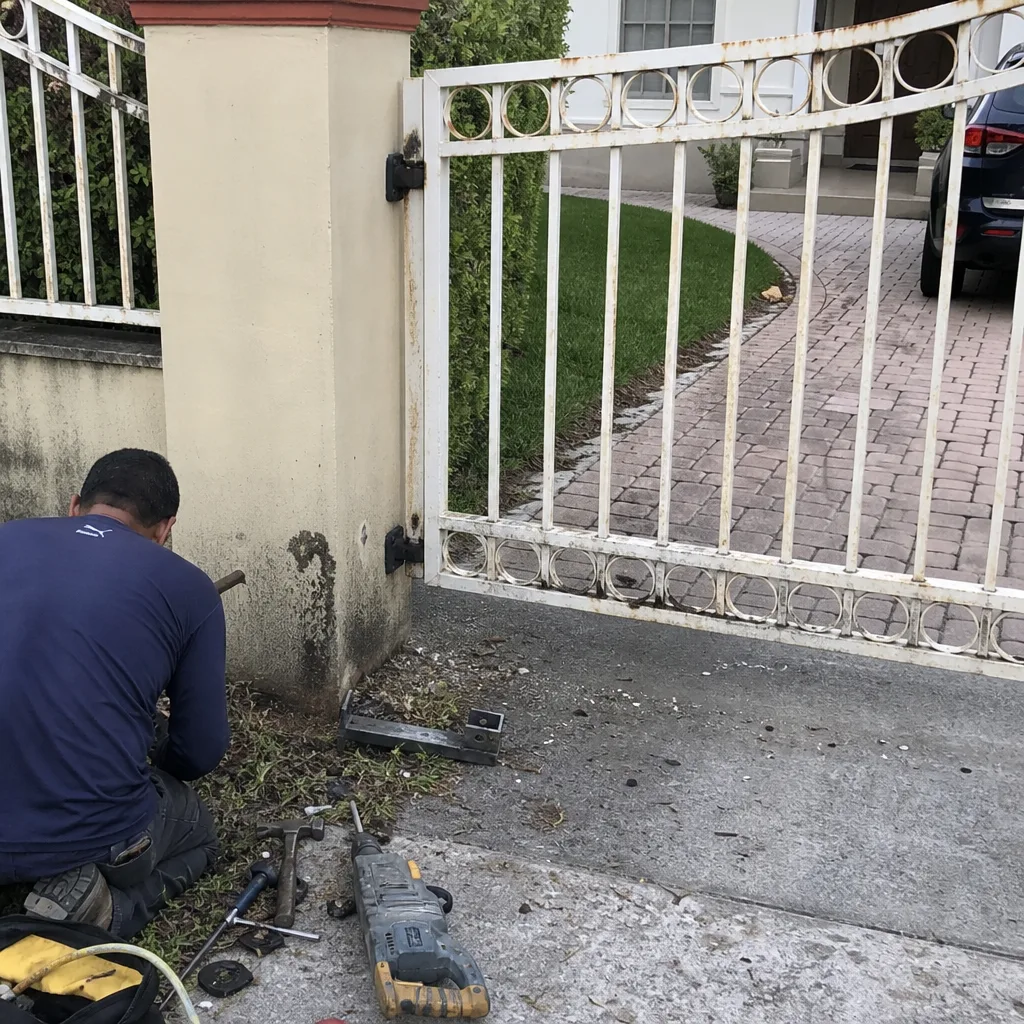 Before
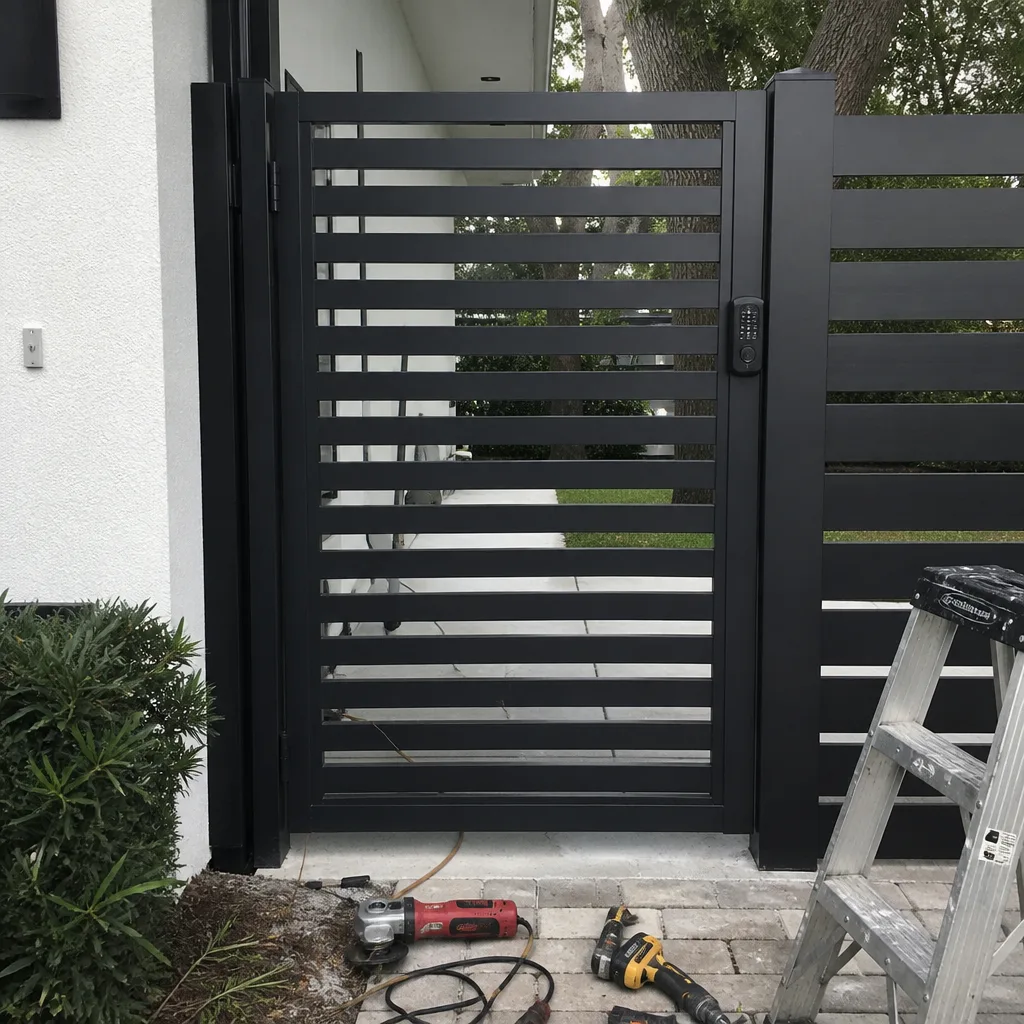 After
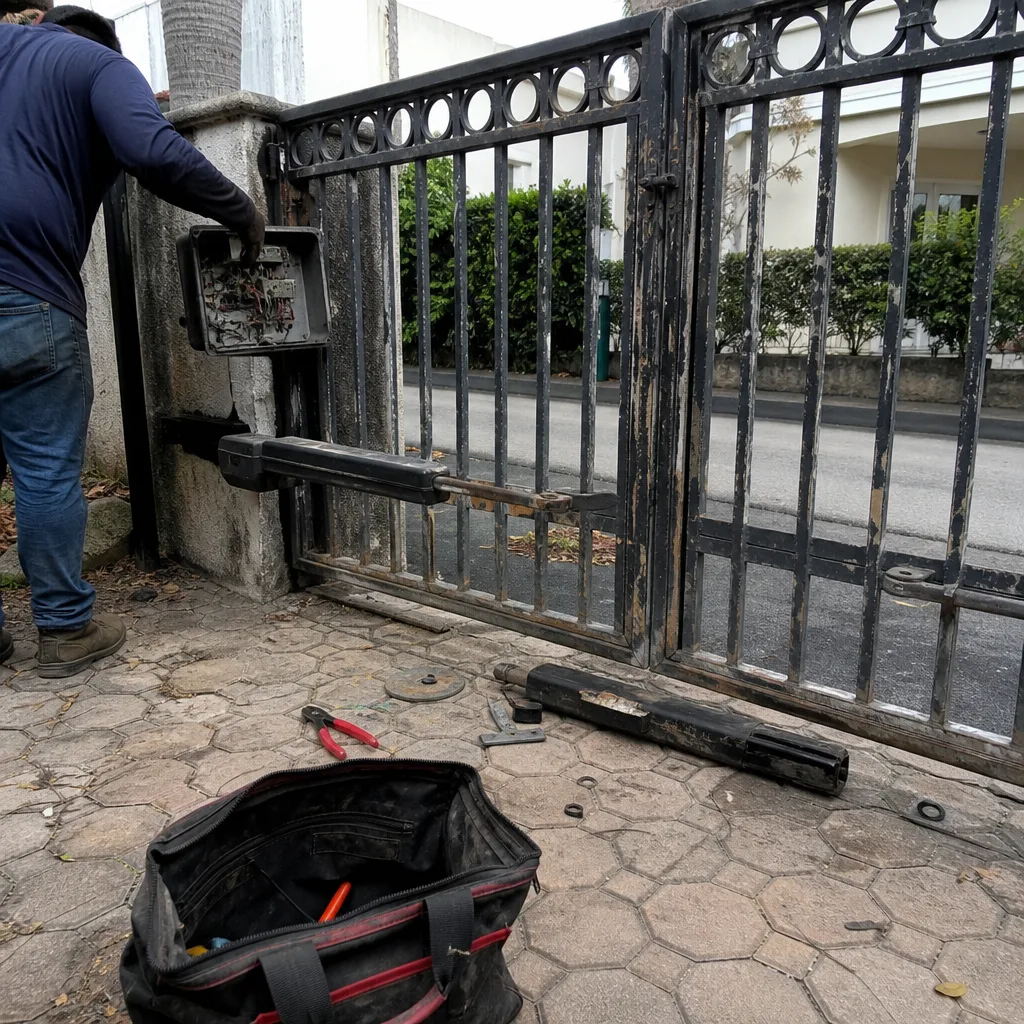 Before
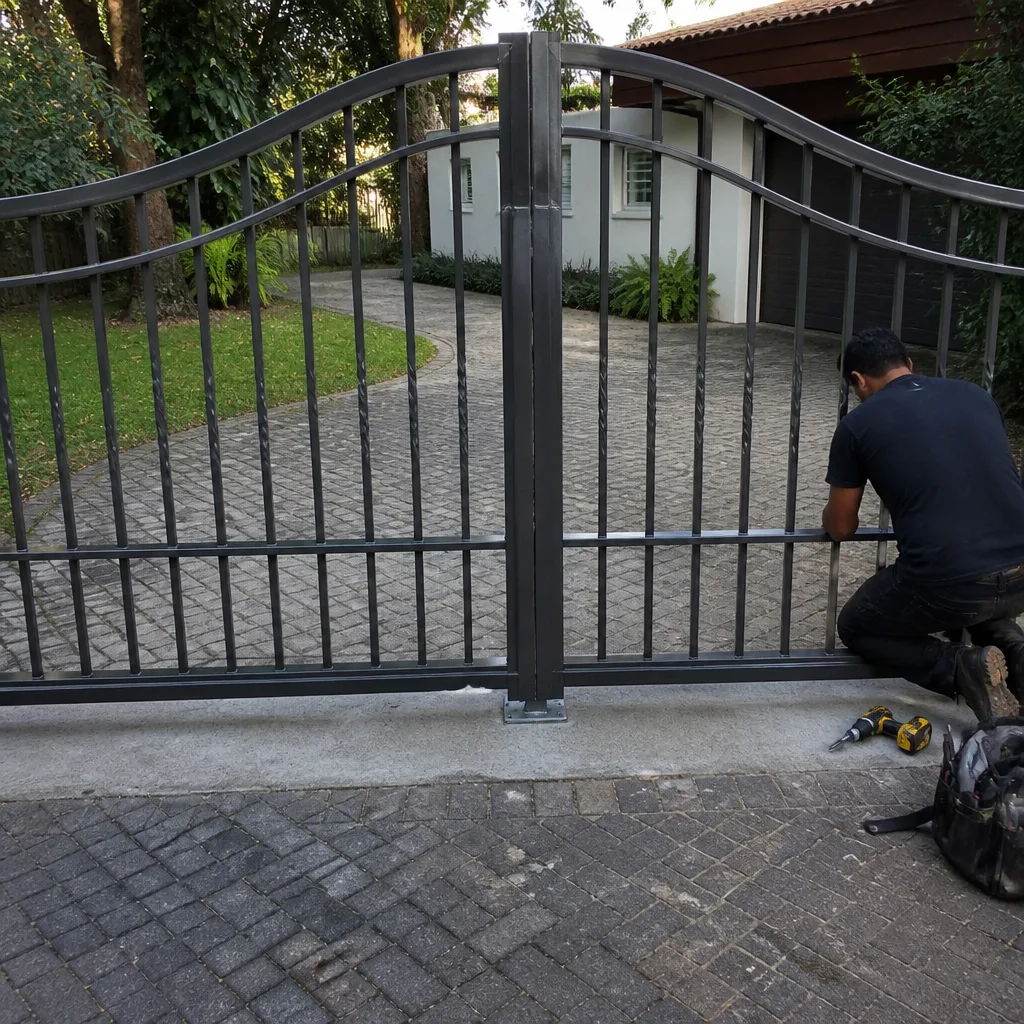 After
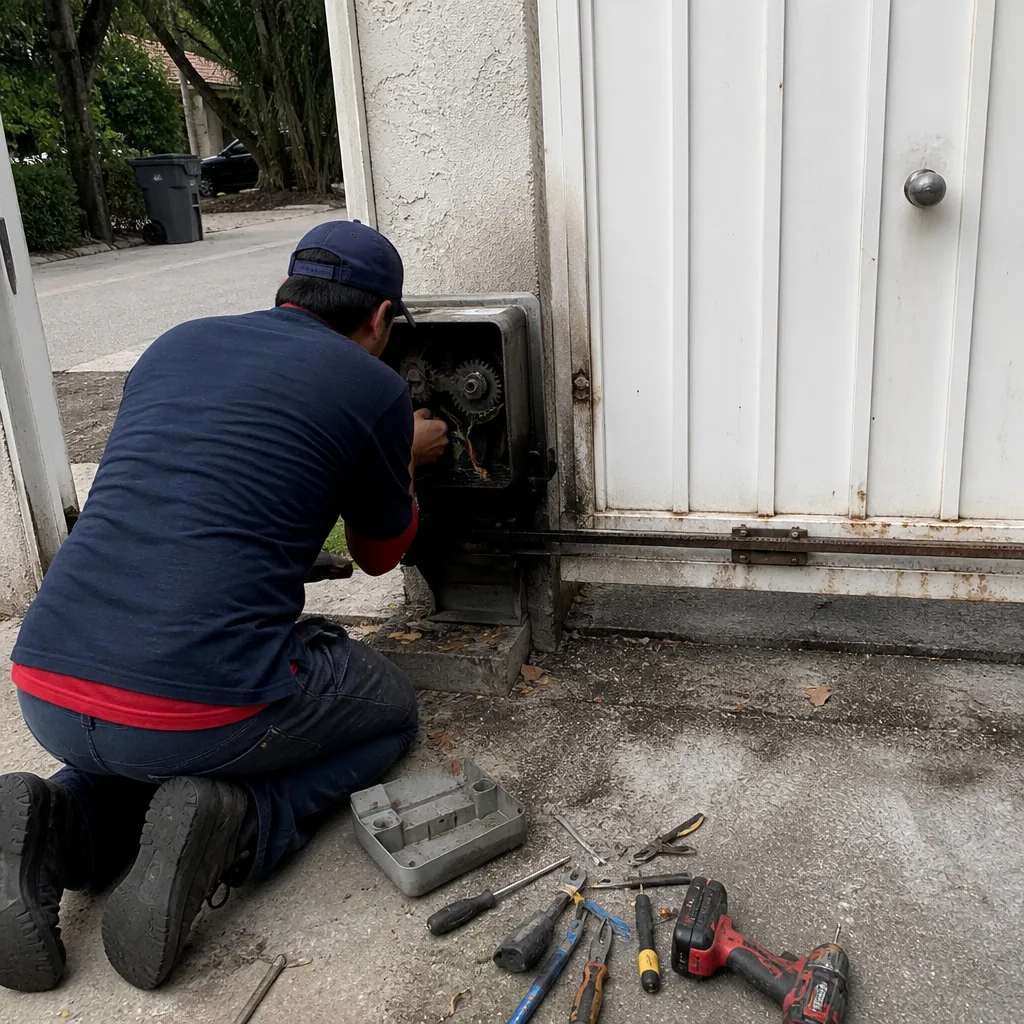 Before
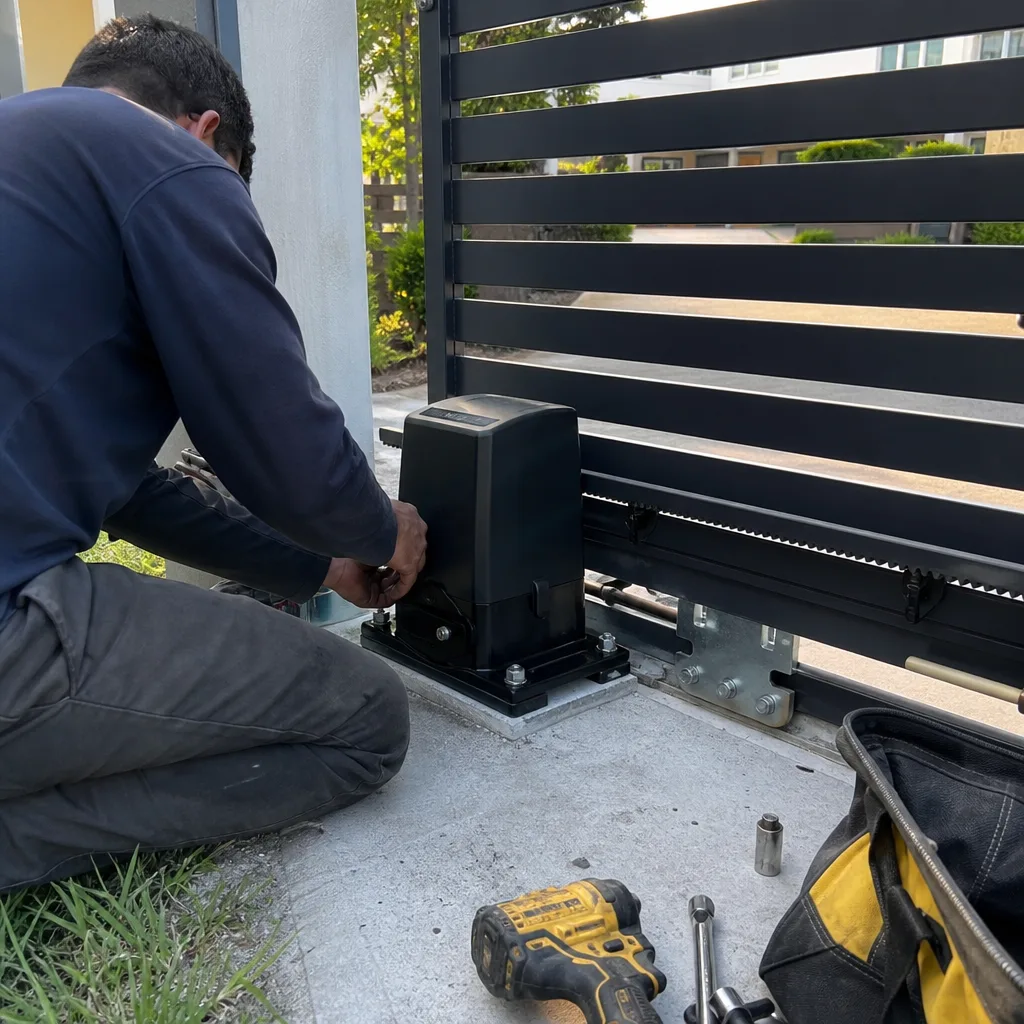 After
When to Call a Professional
Call a gate repair specialist when you notice any combination of the warning signs described in this guide and the symptoms have been present for more than a week. A grinding sound, visible sag, active pitting, or access control that’s failing intermittently are all signs that the gate needs attention now, not later. If the gate has stopped moving entirely, call immediately; a stuck gate is a safety issue and a security issue. If the gate is balanced on damaged hinges or the post is leaning, keep everyone away from the travel path and call before someone gets hurt. Hacienda Gate Repair offers free estimates in Hollywood – call (855) 362-1433. We work on your brand, whether it’s FAAC, BFT, Linear, Viking, or any of the other operator systems we service every week. One call covers the gate and the operator.
Frequently Asked Questions
A gate that hesitates before moving is usually an operator drawing excess current because the mechanical side is resisting, typically from worn hinges, a dirty track, or a failing capacitor. The hesitation is the operator trying to overcome that resistance before the motor gets enough torque to move the gate. In Hollywood, where humidity accelerates hinge and track wear, hesitation is one of the earliest warning signs of an impending operator failure, and it’s worth calling a gate specialist before the operator burns itself out.
When a gate opens but won’t close, you’re most likely dealing with a safety sensor issue, a limit switch failure, or a wiring problem in the closing circuit. The operator thinks there’s an obstruction in the path, or it’s not receiving the signal that the gate has reached the open limit and should reverse. On BFT and Linear operators, we see this in Hollywood frequently because moisture intrusion into the sensor or limit switch housing triggers false obstruction signals. Call (855) 362-1433 for a diagnosis; this problem rarely fixes itself and usually gets worse.
Gate repair costs in Hollywood vary widely depending on whether the problem is mechanical or operator-related, but most common repairs fall between the cost of a service call plus parts and the cost of a full operator replacement. A hinge repair or limit switch adjustment is on the lower end, while a full operator swap is on the higher end. The best way to get an exact number is to call (855) 362-1433 for a free estimate; we’ll tell you exactly what the repair involves and what it costs before any work starts.
For emergency situations like a gate that won’t close and is leaving your property unsecured, we prioritize same-day calls in Hollywood whenever possible. For non-emergency repairs, we schedule appointments quickly but not necessarily same-day; the gate issue, our current schedule, and the specific parts needed all factor in. Call (855) 362-1433 and describe what’s happening, and we’ll tell you exactly when we can be there and whether the situation warrants an emergency dispatch.
A clicking sound without movement usually means the operator’s start capacitor is failing, the drive gear is stripped, or there’s a wiring problem between the control board and the motor. The click is the relay engaging, but the motor can’t start. Continuing to press the button can damage the control board further. Stop using the gate, unplug or disconnect power to the operator, and call a gate specialist; this is a repair that requires opening the operator housing, which we strongly recommend leaving to a trained professional because capacitors retain charge even when the power is off.
The answer comes down to the structural condition of the gate itself, not the operator. If the gate frame is solid but the operator is failing, repair usually makes more sense than replacement. If the gate shows active pitting at weld joints, the posts are leaning, or the hinges have worn through, replacement may be more cost-effective than ongoing repairs. In Hollywood’s coastal climate, corrosion can push a borderline gate toward replacement sooner than inland. A proper assessment from a gate specialist will give you both options with honest numbers; call (855) 362-1433 for a free estimate and we’ll tell you what we’d do if it were our gate.
The Bottom Line
Your gate tells you when it’s failing. The hesitation, the grinding, the sag, the intermittent access control, the rust that’s flaking instead of just discoloring – these are all specific warnings with specific fixes if they’re addressed before the failure becomes total. Hollywood’s climate accelerates the most common problems, but it also means the warning signs follow predictable patterns that a homeowner can learn to read. Document what you see. Note when you first saw it. Learn the two sounds that mean trouble and the three that are normal. And when the warning signs appear, call a gate specialist who works on your brand. Hacienda Gate Repair serves Hollywood homeowners with free estimates at (855) 362-1433; whether you need Electric Gate Repair in Hollywood, structural work on the gate itself, or a full Gate Installation in Hollywood, one call covers the gate and the operator. Visit the Hacienda Gate Repair home page to learn more about how we work.
Written by the team at Hacienda Gate Repair, serving Hollywood since 2012.